AI Translation for Global E-Commerce: What Businesses Should Know
If your e-commerce store only speaks one language, you’re leaving serious money on the table.
The global marketplace has never been more accessible and more competitive. Shoppers in Tokyo, São Paulo, Berlin, and Cairo are ready to buy, but not if your product descriptions, badges, and checkout flow feel foreign to them. That’s exactly where AI translation steps in as a game-changer for e-commerce brands of every size.
In today’s digital age, AI translation isn’t just a nice to have — it’s a core growth lever. From neural machine translation that rivals human accuracy to multimodal tools that handle images and video, the technology has matured dramatically. This guide breaks down why AI translation matters, what the data says, how the tech landscape has evolved, and how to implement it the right way — including often-overlooked details like localizing your product labels and badges.
Why AI Translation Is a Strategic Necessity for Global Growth
The Market Opportunity Is Enormous
According to The Business Research Company, the AI translation market is projected to reach $2.94 billion in 2025, fueled in large part by a cross-border e-commerce market expected to surpass $5.06 trillion by 2028. For brands with ambitions beyond their home market, this is the window of opportunity.
But here’s the sobering flip side: English-only websites reach less than 25% of all internet users. The vast majority of the world’s online shoppers are browsing — and buying — in another language entirely.
The Cost of Inaction
Failing to localize isn’t a neutral decision, it actively costs you customers. Consumer behavior research consistently shows that 75% of shoppers prefer buying from websites in their native language, and a striking 40% will simply abandon a purchase if the content isn’t localized.
Think about what that means for your conversion funnel. You might be driving traffic, running ads, and optimizing your checkout — but if your copy doesn’t resonate linguistically and culturally, a huge portion of that effort evaporates.
For global brands, the question is no longer whether to invest in AI translation, but how quickly to do it well.
Data-Driven Benefits of Localization
Traffic and Conversion Gains
The ROI case for localization is compelling across the board. Brands that invest in AI-powered translation report an average 47% increase in website traffic after launching multilingual experiences. That’s not just more eyeballs — it’s more qualified visitors who actually understand what you’re selling.
Conversion rates tell an even more exciting story. Businesses consistently report double the conversion rates in localized markets, with localized sales increases ranging from 25% to 70% depending on the industry and target region.
Return on Investment
The financials stack up. Deploying AI translation strategically can yield a 345% ROI, with brands seeing an average 5:1 return for every dollar spent on translation services. When you frame it that way, the question shifts from “Can we afford to translate?” to “Can we afford not to?”
These aren’t outlier numbers from enterprise giants. Mid-sized and even small e-commerce businesses are achieving meaningful results by using AI translation to punch above their weight in global markets.
How Technology Goes Beyond Simple Text
AI translation has evolved far beyond copy-pasting product descriptions through a basic machine translator. Here’s what the technology looks like today.
Neural Machine Translation Gets Smarter
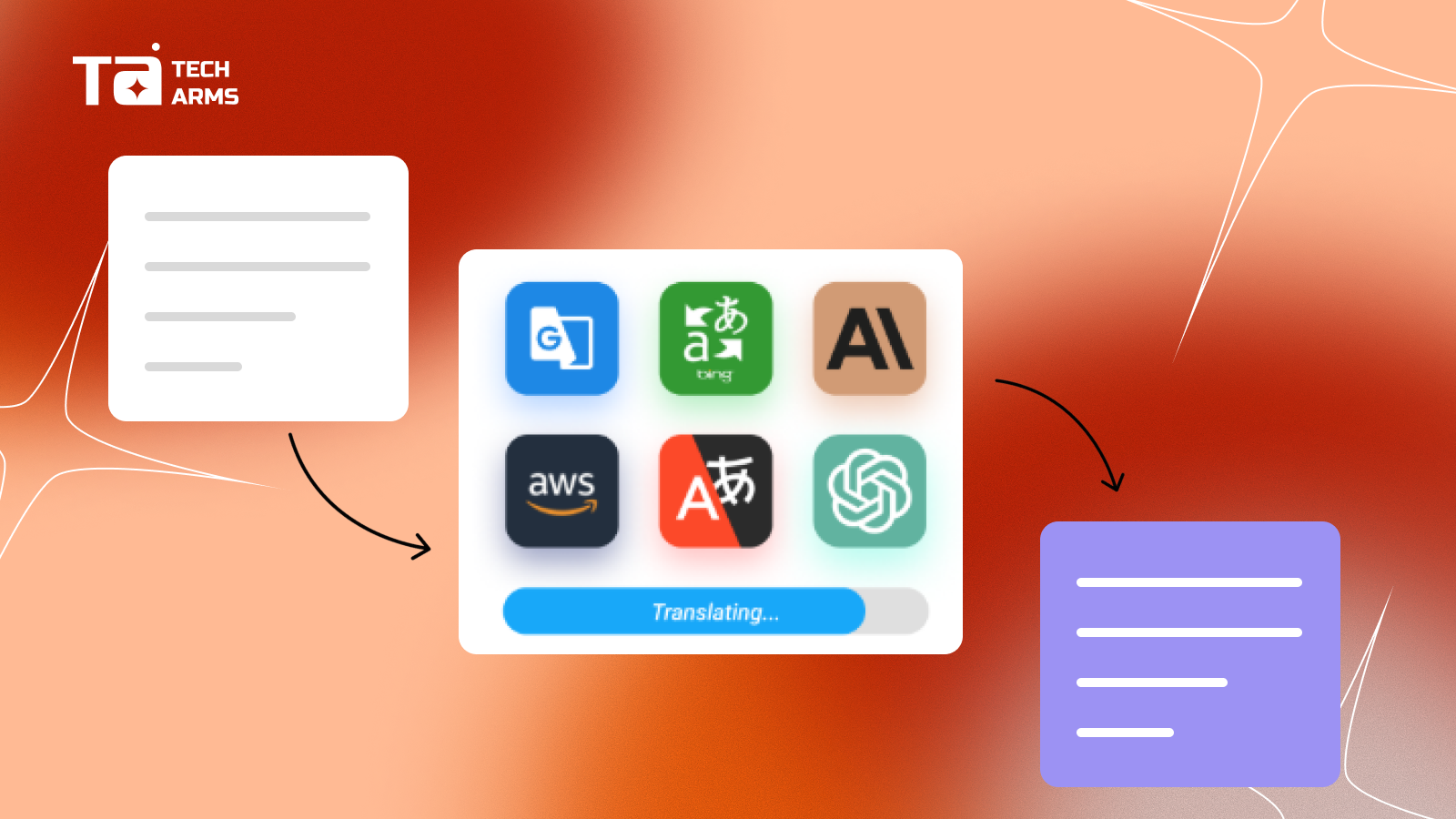
Modern Neural Machine Translation (NMT) systems have made extraordinary strides in accuracy. Today’s best NMT engines achieve error rates as low as 2.5 per 1,000 words — a level of precision that’s approaching human-quality output for many content types.
That’s a meaningful threshold. It means that for a product catalog with 10,000 words, you’d expect roughly 25 minor errors, many of which a quick human review could catch in minutes rather than hours.
Multimodal Translation
One of the most significant shifts is that AI translation now operates across multiple formats and media types:
- Text within product images: AI can detect and translate text embedded in graphics, banners, and lifestyle photography.
- Voice translation: Customer service bots and live shopping experiences can now communicate fluently in a shopper’s native language in real time.
- Live video interpretation: Product demos, virtual consultations, and live commerce events can be interpreted on the fly for international audiences.
This multimodal capability closes a gap that left many brands partially localized — their words were translated, but their visuals still spoke the wrong language.
Enable AI Translation for Your Labels
Translation-as-a-Feature
Perhaps the most practical development for e-commerce operators is the rise of Translation-as-a-Feature (TaaF) — seamless integration of AI translation directly into platforms like Shopify and WooCommerce. Rather than running a separate localization workflow, translation becomes a native part of your store’s infrastructure. It’s faster, more consistent, and far easier to maintain.
Best Practices for AI Translation Implementation
Knowing the technology is one thing; deploying it effectively is another. Here’s what best-in-class implementation looks like.
The Hybrid Formula
The most effective approach combines machine speed with human nuance. Machine Translation Post-Editing (MTPE) — where AI handles the first draft and a human editor refines it to deliver the best of both worlds. This hybrid model typically yields 30–50% cost savings compared to full human translation, without sacrificing quality in the places it matters most.
For high-volume content like product catalogs, metadata, and FAQs, AI does the heavy lifting. For emotionally resonant brand content, a skilled human brings it home.
Strategic Content Tiering
Not all content deserves the same translation treatment. A practical tiering approach looks like this:
AI Translation is best for:
- Bulk product catalogues and specifications
- Technical attributes and metadata
- User-generated content like reviews
- Category descriptions and filter labels
Human Translation is essential for:
- Legal and compliance documents
- Brand manifestos and mission statements
- High-stakes marketing campaigns
- Taglines, slogans, and anything that leans on wordplay or cultural resonance
Glossary and Terminology Management
Consistency is a silent conversion killer. If your brand calls a product feature by three different names across three languages, you erode trust. AI tools today include robust glossary management features — allowing you to define key terms, brand names, and preferred phrasing that the system will apply consistently across every piece of translated content. This protects your brand voice at scale.

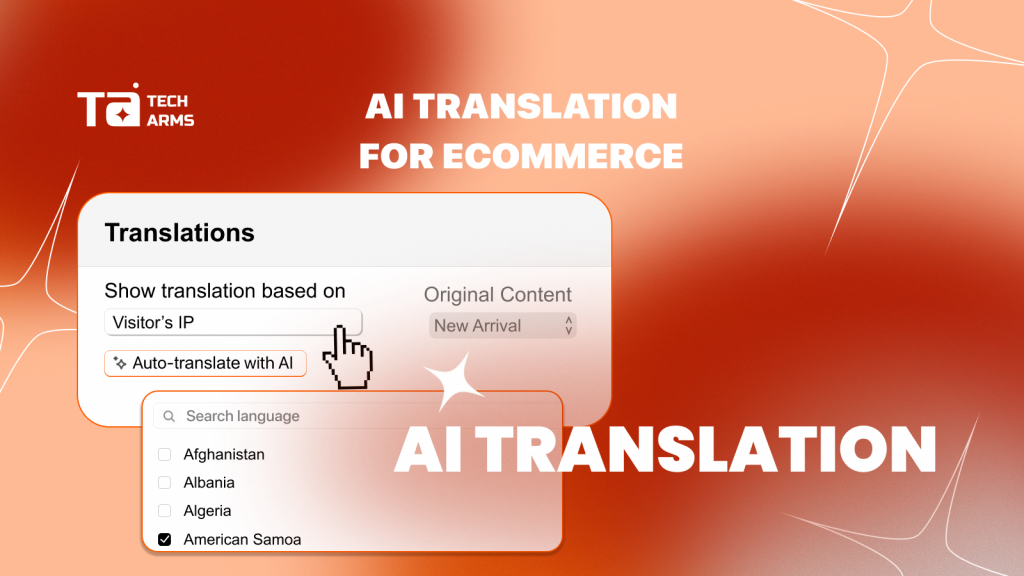
Don’t let your most important conversion triggers get lost in translation. TA Product Labels & Badges make it easy to automatically localize your promotions across markets. The AI translation feature for text in labels ensures your value propositions — “Sale,” “New Arrival,” “Top Rated” — are perfectly understood by every customer, regardless of their language. It’s one of the smallest changes you can make with one of the biggest impacts on global conversion rates.
FAQ
Very accurate — and improving steadily. Modern NMT systems achieve error rates as low as 2.5 per 1,000 words, which is approaching near-human precision for many content types. That said, accuracy varies by language pair and content type. Technical product descriptions tend to translate very well; idiomatic marketing copy still benefits from human review.
Yes. Through multimodal translation, today’s AI systems can detect and translate text embedded in product images, generate localized video captions, and even support real-time voice translation for customer service interactions and live shopping. This means your entire content experience — not just written copy — can be localized.
Absolutely. One of the most compelling aspects of AI translation in 2025 is the democratization of access. Small teams can now scale globally without the budget required for full human translation agencies. AI translation typically delivers up to a 40% reduction in translation costs, making international expansion viable for brands that previously couldn’t afford it.
AI still struggles with cultural nuance, emotional tone, idiomatic expressions, and humor. A literal translation of a clever English pun into Japanese is likely to land with a thud. This is precisely why the hybrid MTPE model works so well — AI handles the volume, humans handle the soul. For brand-critical content, always include a human review step.
Conclusion
The technology is smarter than ever with neural systems and near-human accuracy, multimodal capabilities that translate images and video, and seamless platform integrations that make localization a natural part of your workflow. But technology alone isn’t enough. Smart implementation — tiering your content, blending machine efficiency with human refinement, and remembering to localize even the small stuff like your product labels and badges — is what separates brands that dabble in global markets from those that truly win them.
Whether you’re launching your first international market or scaling an existing global presence, now is the time to make AI translation a core part of your growth strategy.

Hi, I’m Vu Cam Chi – a detail-driven digital marketer focused on building practical growth solutions for ecommerce and digital products. I combine data, user behavior, and clear messaging to turn ideas into results. Strategy guides my decisions, and optimization is part of my daily work. I care deeply about creating experiences that make sense for users and actually perform.