How to Build a Subscription Box Business
The subscription box industry isn’t just a trend, it’s a full-blown economic shift. If you’ve been wondering how to build a subscription box business that generates reliable recurring revenue, you’re asking the right question at the right time. The subscription box market is poised for rapid expansion, with its value expected to reach $101.81 billion by 2030, growing at an impressive CAGR of 19.6%.
Even retail giants like Amazon and Walmart have pivoted toward subscription models — with 79% of traditional direct-to-consumer businesses now offering them. The message is clear: customers love the convenience, and entrepreneurs love the predictable income.
But success in this space isn’t accidental. Behind every thriving subscription box is a carefully chosen niche, a compelling value proposition, smart logistics, and a relentless focus on keeping subscribers happy. This guide walks you through every step — from your first product prototype to managing churn at scale.
What is a subscription box?
A subscription box is a recurring delivery service that sends a themed, curated package of products directly to your doorstep on a regular schedule, typically every month or quarter. Instead of shopping for individual items, you pay a repeating fee to receive a collection of goods tailored to a specific niche, such as beauty, snacks, books, or pet supplies. The entire experience relies on the elements of convenience and surprise; rather than choosing the exact contents yourself, you trust a team of experts to handpick a mix of familiar favorites and new products, turning a routine delivery into a fun experience of discovery.
How to build a subscription box in 6 steps
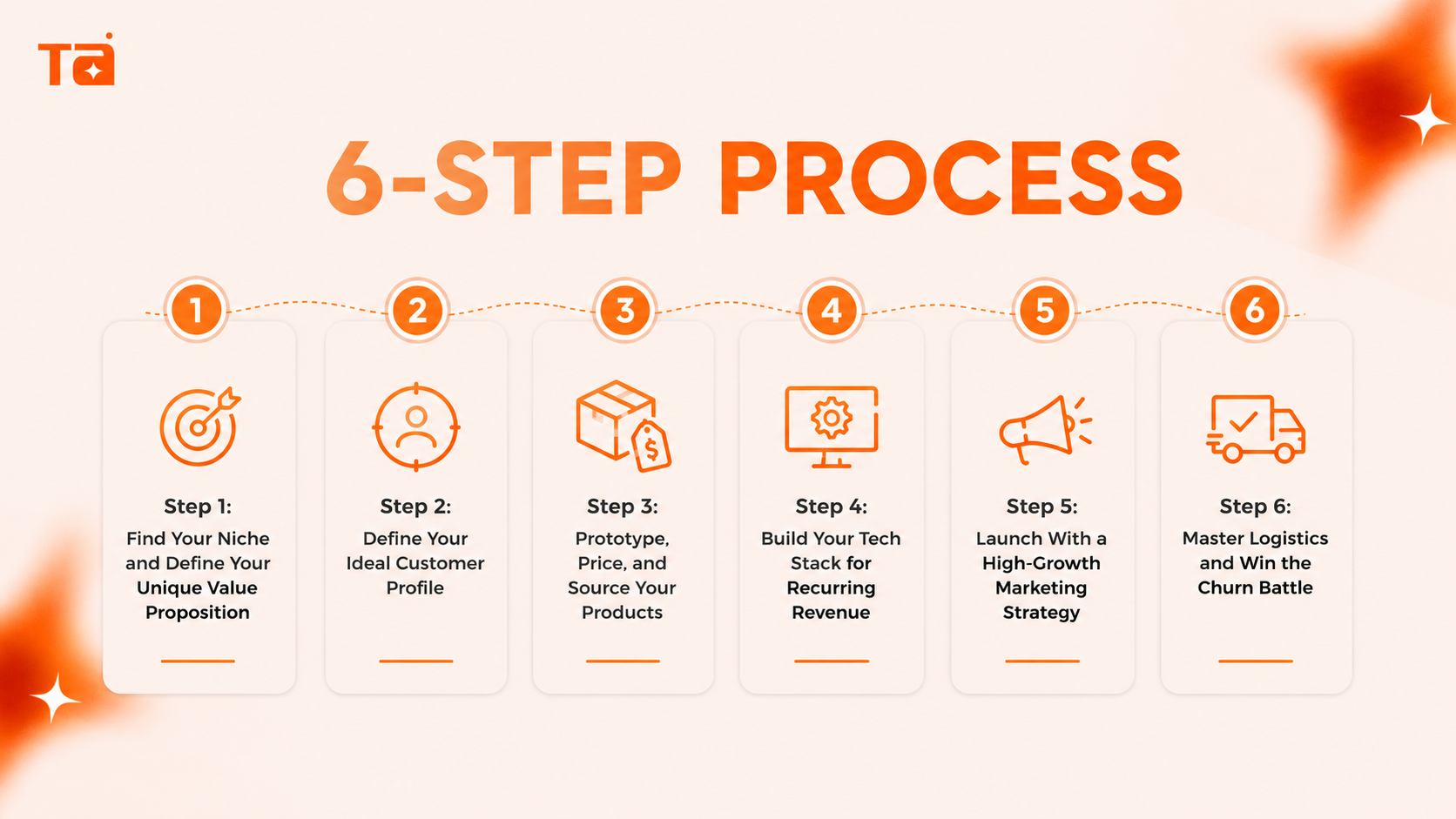
Step 1: Find Your Niche and Define Your Unique Value Proposition
Identify a Niche You Can Own
The best subscription boxes aren’t built around generic categories — they’re built around specific communities. Whether your passion is eco-conscious pet supplies, artisan hiking gear, or indie beauty products, the goal is to find a niche where you have either a genuine interest or an “unfair advantage” in sourcing.
Popular subscription box categories include:
- Beauty and skincare
- Kids’ educational kits
- Pet supplies and treats
- Fitness and wellness
- Eco-friendly or sustainable goods
To validate your niche, conduct what experienced founders call an “analog A/B test”: browse existing subscription boxes on marketplaces like Cratejoy and look for patterns in negative reviews. Where are competitors falling short? That gap is your opportunity.
Craft a Hook-Worthy UVP
Your Unique Value Proposition (UVP) is what makes a potential subscriber choose you over the dozen other boxes in your category. Don’t settle for “curated products delivered monthly.” Go deeper inside with each customer persona such as:
- Personalization: Birchbox built its entire model on an onboarding quiz that matched products to skin type and preferences.
- Education: KiwiCo ships projects, not just products — subscribers learn something new every month.
- Exclusivity: Limited-edition or creator-collab boxes create urgency and FOMO.
Your UVP should be instantly communicable in a single sentence and should answer: Why this box, and why now?
Step 2: Define Your Ideal Customer Profile
Knowing who you’re selling to is as important as knowing what you’re selling. Generic targeting leads to generic results — and high churn.
Build Detailed Customer Personas
Experienced subscription box operators recommend building 3 to 6 fictionalized customer models, each with a name, specific lifestyle, motivations, and — critically — negative triggers. For example:
- “Eric” is a 34-year-old fitness enthusiast who cancelled his last subscription because he kept receiving duplicate items. He needs variety and freshness every single month.
- “Maya” is a 28-year-old eco-conscious professional who wants to know the story behind every product. She’ll churn if packaging isn’t sustainable.
The more granular your personas, the better your curation, marketing, and retention strategy will be.
Research Real People
Research confirms that 96% of marketers agree personalization increases sales. Don’t just invent your personas — find real people who match. Search niche hashtags on Instagram and TikTok, join relevant Reddit communities, and read product reviews in your category. The language your ideal customers use to describe their needs is also the language that will convert them on your landing page.
Step 3: Prototype, Price, and Source Your Products
Build Your First Prototype Box
Before you worry about suppliers and fulfillment, build a prototype. Select 4–6 products that represent your vision for the box — this prototype will be the foundation of your product photography, landing page, and influencer outreach. It doesn’t need to be perfect; it needs to be compelling.
Price for Sustainable Margins
One of the most common mistakes new subscription box founders make is underpricing. A solid rule of thumb: aim for a minimum 40% profit margin. To get there, you need to account for every cost layer, including:
- Product cost (unit cost per item x number of items)
- Packaging materials — boxes, tissue paper, inserts, tape
- Shipping postage — often the single biggest expense
- Transaction and platform fees — typically 2–3% per transaction
- Monthly software — subscription management, email, analytics
- Paid advertising — especially during launch
Don’t offer free shipping until your margins can absorb it. Many founders get burned early by treating free shipping as a launch tactic before their unit economics support it.
Source Smart
You have two main paths for product sourcing:
| Sourcing Method | Pros | Cons |
| In-house / Direct | Higher margins, full control | Harder to scale, time-intensive |
| Wholesale / Suppliers | Consistent delivery, easier to scale | Higher per-unit cost |
Regardless of which route you choose, always order samples before signing any long-term supplier contracts. Quality-test products yourself before they land in a subscriber’s hands — your brand reputation depends on it.
Step 4: Build Your Tech Stack for Recurring Revenue
Getting the product right is only half the battle. The operational backbone of a subscription box business — automated billing, subscriber management, and retention tools — lives in your software stack.
Why a Dedicated Subscription App Is Non-Negotiable
A general-purpose ecommerce store isn’t enough. To run a subscription box smoothly, you need a platform built specifically for recurring revenue. The TA Subscriptions App is purpose-built for exactly this.
Here’s what a robust subscription management platform should handle:
Automated Billing: Set up recurring payments on weekly, bi-weekly, or monthly schedules without manual intervention. Every failed payment that goes unaddressed is a subscriber you’re losing silently.
Smart Dunning Management: Failed credit card payments are the leading cause of involuntary churn — subscribers who didn’t intend to cancel but got dropped anyway. Good dunning logic automatically retries failed payments on an optimized schedule, recovering revenue that would otherwise be lost.
Self-Service Customer Portal: Empower subscribers to pause, skip a month, swap products, or update their shipping address without emailing your support team. This single feature can dramatically reduce cancellations, because subscribers who need flexibility get it without friction.
Customizable Bundles: Let customers build their own boxes or choose from curated kits. Personalization drives loyalty — and loyalty drives lifetime value.
Automated “Loop” Flows: Use behavior-triggered automations to upsell and cross-sell at the right moments — for example, sending a personalized offer when a subscriber has been active for 3 months, or surfacing an upgrade when they interact with a product recommendation email.
Step 5: Launch With a High-Growth Marketing Strategy
Build Your List Before You Launch
The biggest mistake in subscription box launches is going live with zero audience. Spend 4–8 weeks before launch building a pre-launch email list through your landing page. Offer an early-bird discount, a limited founding member price, or exclusive first-box access to incentivize sign-ups.
Leverage Influencer Unboxing
Unboxing videos remain one of the highest-converting content formats for subscription boxes. Before your public launch, send your prototype box to niche micro-influencers — creators with audiences of 10,000–100,000 who closely match your ICP. Their endorsements carry outsized credibility with exactly the people you’re trying to reach.
Activate Referral and Affiliate Programs
Your happiest subscribers are your best marketers. Build a referral program that rewards them with loyalty points, a free month, or a discount for every friend they bring in. Affiliate programs work similarly — giving content creators, bloggers, and niche community leaders a reason to promote your box on an ongoing basis.
Run Paid Social to a High-Converting Landing Page
Once organic channels are in motion, layer in paid traffic. Meta (Facebook and Instagram) and Google ads work particularly well for subscription boxes, especially when targeting interest-based and lookalike audiences built from your email list. Drive all traffic to a dedicated landing page — not your homepage — with a single clear call to action and an email capture form above the fold.
Step 6: Master Logistics and Win the Churn Battle
Choosing Your Fulfillment Model
How you fulfill orders will define your capacity to scale.
- DIY Fulfillment: Ideal for early-stage operations with under 100 subscribers. You maintain full quality control, but your time and physical space become limiting factors quickly.
- 3PL (Third-Party Logistics): When you’re ready to scale, a 3PL partner picks, packs, and ships your boxes — often with global reach and better shipping rates than you’d negotiate individually.
The decision point for most founders is around 200–500 subscribers per month. At that volume, the time savings from outsourcing fulfillment typically outweigh the cost.
Reducing Churn
In a subscription business, churn is the silent killer. Industry case studies show that merchants who optimize their cancellation flows — adding pause options, offering discounts, or collecting exit feedback — can cut monthly churn in half, for example reducing it from 10% to 5%.
That improvement compounds dramatically. At 5% monthly churn, the average subscriber stays for 20 months. At 10% churn, they stay for just 10.
Other tactics that reduce churn:
- Exit surveys: Learn exactly why subscribers are cancelling so you can fix the root cause.
- Pause options: Subscribers who need a break shouldn’t have to cancel — they should be able to pause.
- Personalized win-back emails: Reach out to churned subscribers 30 and 60 days after cancellation with a tailored offer.
Set a Clear Return Policy Early
The average retail return rate is 14.5%, and subscription boxes aren’t immune. Establish a clear, fair, and easy-to-understand return policy before your first box ships. Transparency builds trust — and trust reduces churn.
How to build a subscription box with TA Subscriptions App
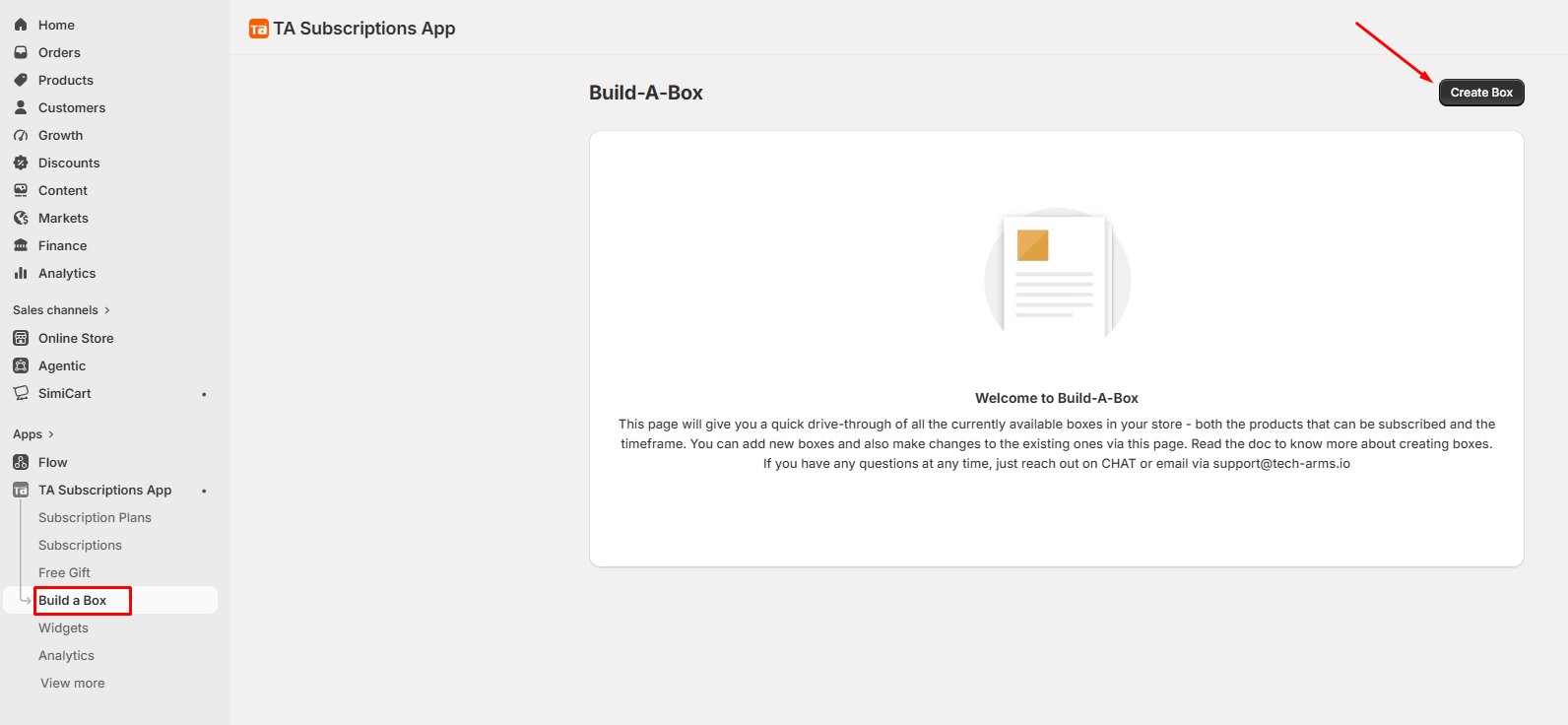
1. Create Box
Go to Build a Box > Create Box. You can choose the Static or Dynamic Box to match your needs
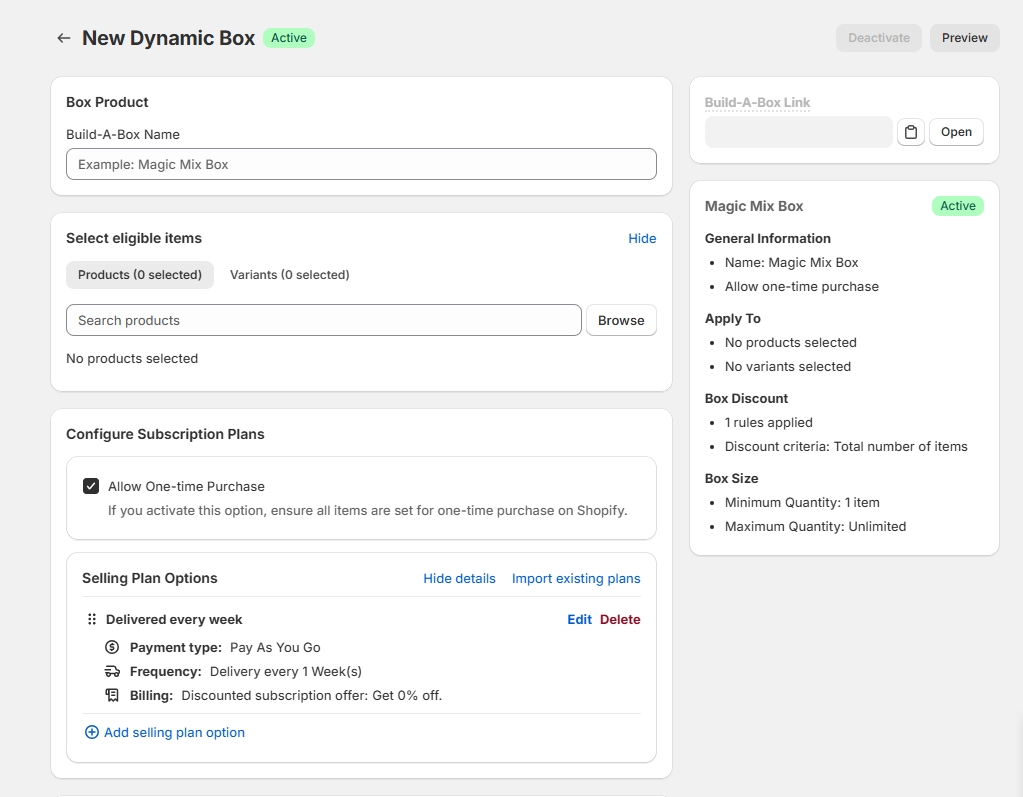
2. Fill out box information
Fill out box information. You can see a live preview of the box on the right hand.
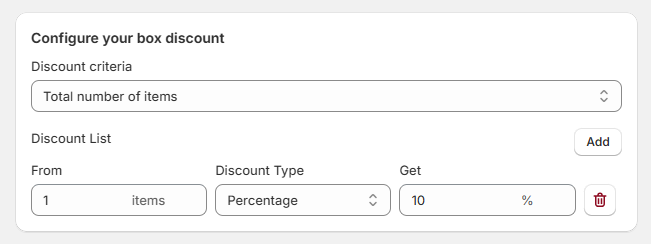
3. Set box discount
Define the rule as you wish. This is what motivates customers to purchase box other than single products, so make sure to set this with care!
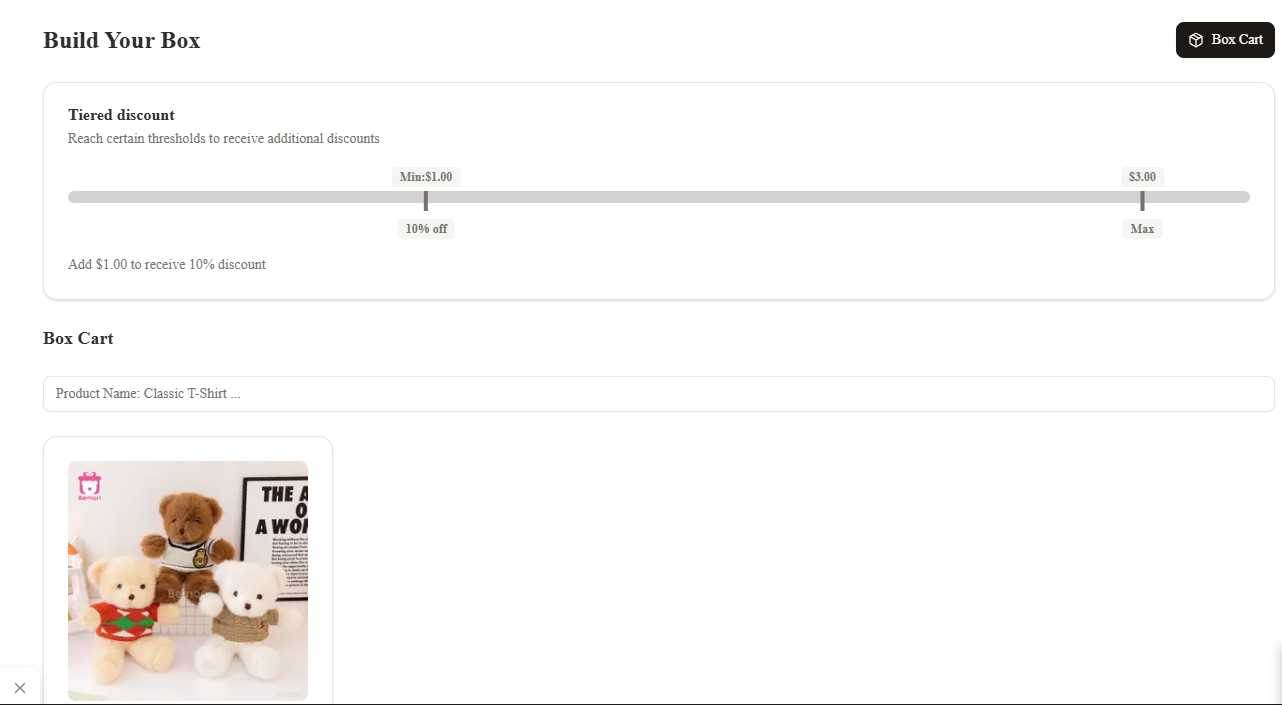
4. Preview box
Click Preview on the top of the page to see how the box looks on your store front.

5. Test
Test and make sure everything works well! The box discount and min/max quantity in step 3 will appear here
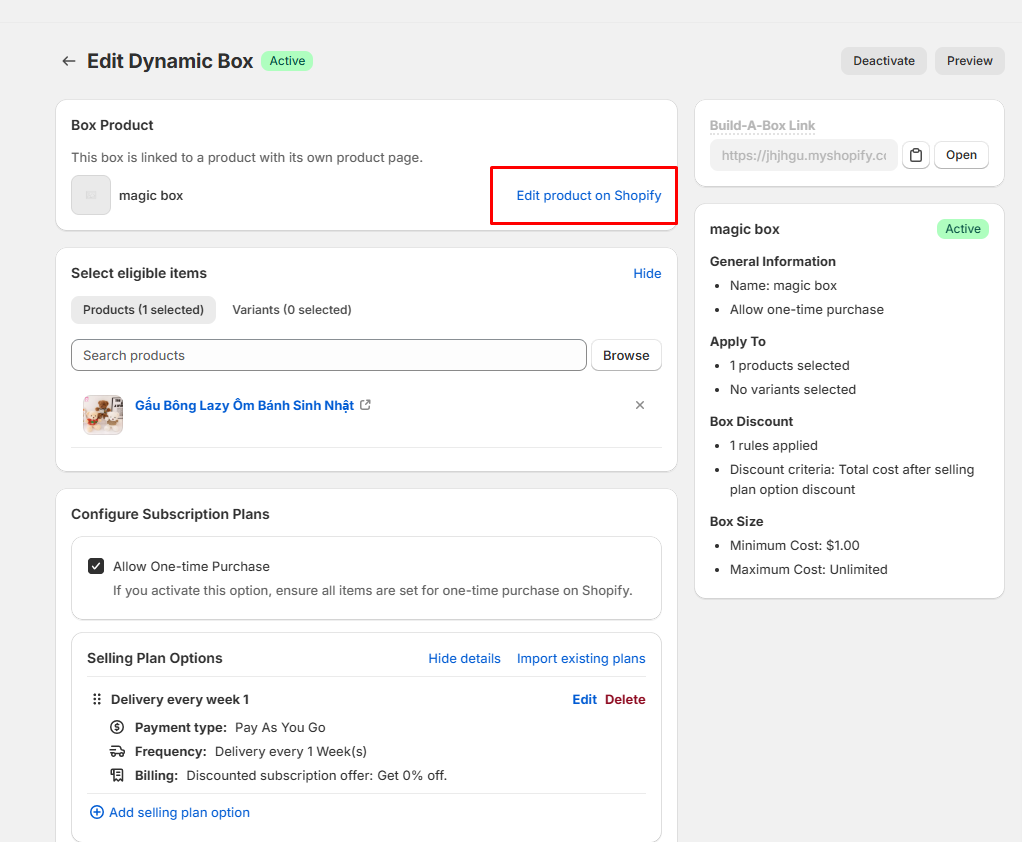
6. Add product picture
After saving the box, go back to add a picture and make it more attractive. You can do so by clicking “Edit product on Shopify” in the “Box product” card here.
Explore How to create Static Box here
Conclusion
Learning how to build a subscription box business is one thing — executing it consistently is another. The entrepreneurs who succeed in this space aren’t just passionate about their niche (though that helps). They’re systematic about customer personas, disciplined about pricing, relentless about reducing churn, and smart about the tools they use to automate the recurring revenue engine.
Start with your niche. Build your persona. Prototype, price, and test. Then use the right technology to turn a great concept into a scalable, recurring-revenue business.
Ready to Build Your Subscription Box Business?
TA Subscriptions App gives you everything you need to launch, manage, and grow a subscription box — from automated billing and smart dunning management to self-service customer portals and customizable bundles. Whether you’re pre-launch or looking to scale to your first 10,000 subscribers, our platform is built to grow with you.

Hi, I’m Vu Cam Chi – a detail-driven digital marketer focused on building practical growth solutions for ecommerce and digital products. I combine data, user behavior, and clear messaging to turn ideas into results. Strategy guides my decisions, and optimization is part of my daily work. I care deeply about creating experiences that make sense for users and actually perform.