Discount Popup Types and Examples That Drive eCommerce Conversions
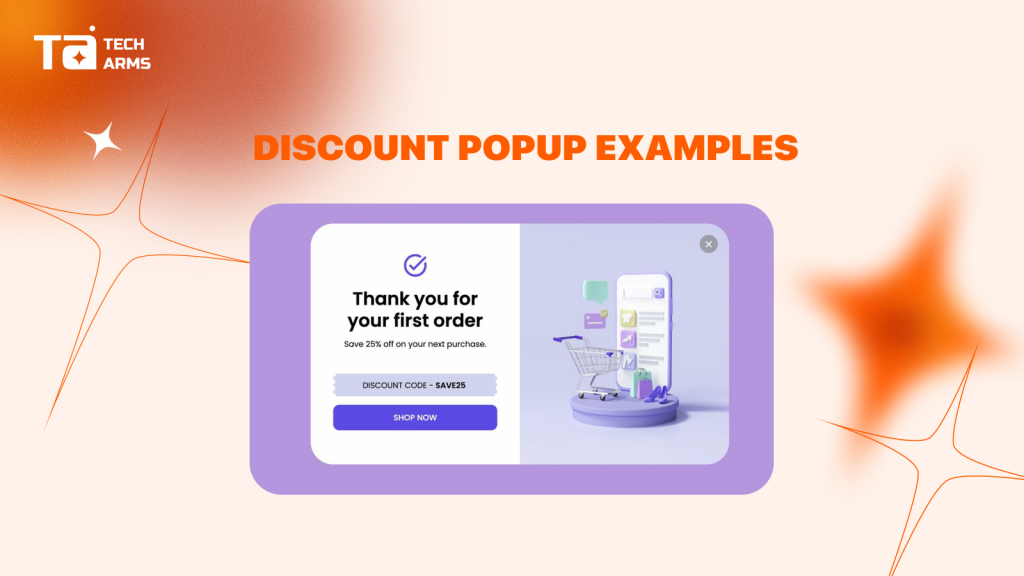
Picture this: A potential customer lands on your store, browses a few products, and then… leaves. No purchase. No email. Just another visitor lost in the void of your analytics dashboard.
This scenario plays out millions of times daily across eCommerce sites. But here’s the thing – 97% of shoppers actively look for deals when purchasing online. That means nearly every visitor arriving at your store is hoping to find a discount. The question isn’t whether you should offer one, but how you present it to maximize conversions without training customers to wait for promotions.
Enter the discount popup: a focused, strategic tool that has become essential for eCommerce growth. Over 60% of successful online businesses use discount popups because they work. When implemented correctly, they don’t just capture emails, they turn browsers into buyers, segment your audience for personalized marketing, and create urgency that drives immediate action.
In this guide, you’ll discover the exact discount popup strategies used to achieve conversion rates of 15-20% and returns on investment exceeding 100x. Whether you’re running your first campaign or optimizing an existing strategy, you’ll learn the proven tactics that separate high-performing popups from those that get immediately closed.
What is a Discount Popup and Why Does It Matter?
A discount popup is a strategically designed overlay window that appears on your website to capture visitor attention and present a compelling marketing offer. Unlike generic popups, a discount popup specifically focuses on providing value through coupons, percentage discounts, free shipping, or special incentives in exchange for an action, typically an email signup or immediate purchase.
Discount popups have earned their place as the second most popular channel for capturing visitor attention in eCommerce, and for good reason. They work at the critical intersection of customer intent and opportunity:
They capture buying intent at the right moment. Since 97% of online shoppers actively seek deals, your discount popup isn’t interrupting them, it’s answering a question they’re already asking: “Is there a coupon for this store?”
They prevent revenue leakage. The average eCommerce site converts just 2-3% of traffic. That means 97-98% of your hard-earned visitors leave without purchasing. A well-designed discount popup can convert an additional 10-20% of those visitors into email subscribers who you can market to long-term.
They enable zero-party data collection. Modern discount popups go beyond simple email collection. By asking strategic segmentation questions (like “What are your wellness goals?” or “What type of products interest you?”), you gather valuable information that customers willingly provide, enabling personalized marketing that drives 43% purchase rates after signup.
The 5 Most Effective Discount Popup Types
Not all discount popups are created equal. The most successful eCommerce brands match their popup type to their specific business goals. Here are the ten proven formats that consistently drive results:
1. Email Subscription Popup
The email subscription popup is the workhorse of lead generation. It offers visitors a small discount (typically 5% to 15% off) their first purchase in exchange for their email address or phone number.

This popup type serves a dual purpose: it builds your email marketing list while simultaneously converting first-time visitors into customers. The discount removes the initial purchase barrier, and once customers are in your ecosystem, you can nurture them with future campaigns.
Best for: Building your subscriber base and converting first-time visitors.
2. Subscriber Segmentation Popup
This sophisticated approach combines lead capture with personalization. Instead of just collecting an email address, the popup asks visitors about their preferences – what type of pet they have, which product categories interest them, or what their primary needs are.
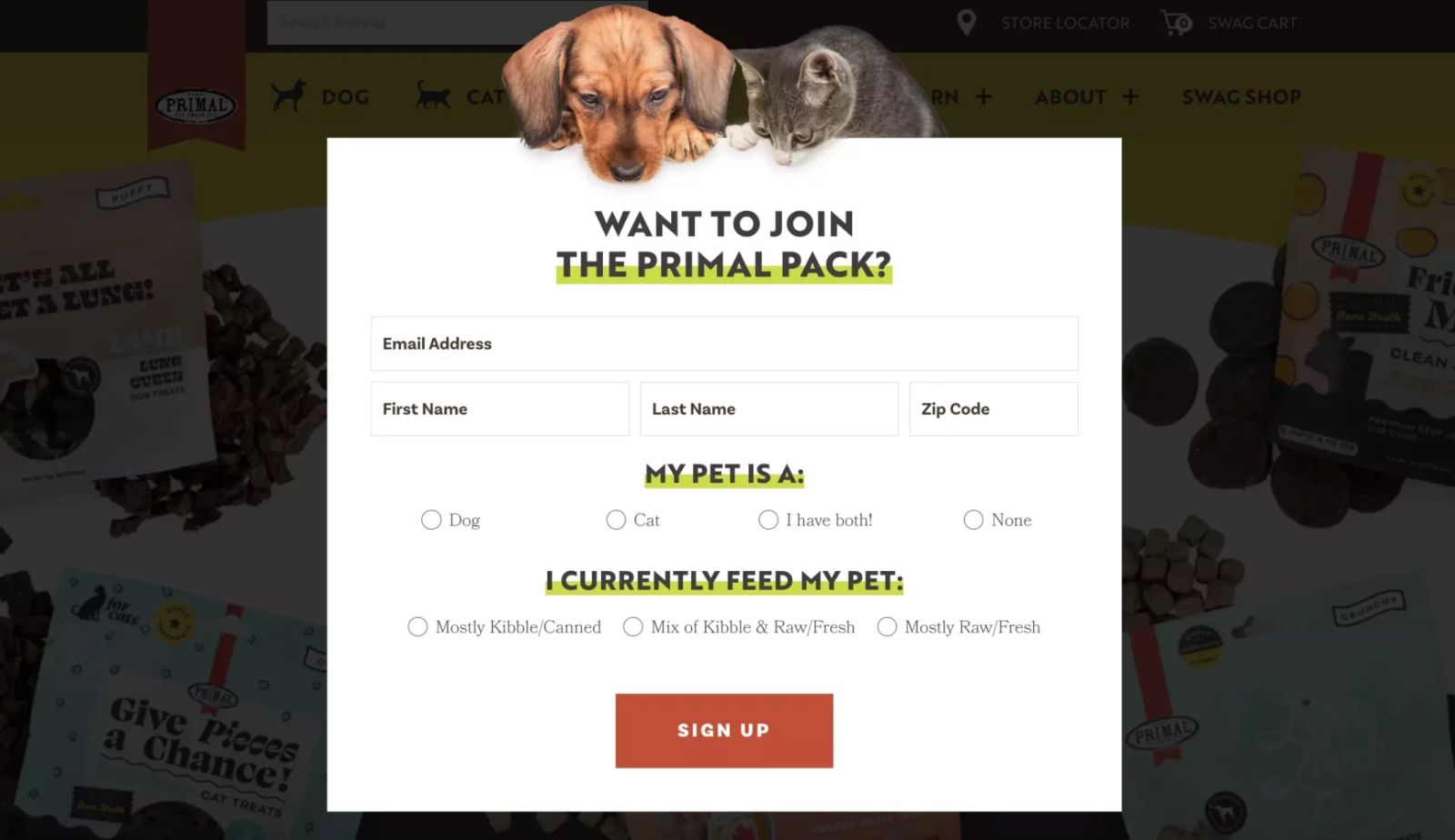
The discount incentivizes visitors to complete this brief survey, while the data you collect allows you to send highly targeted, relevant marketing messages in the future. Research shows that discount surveys can achieve completion rates between 20% and 40%.
Best for: Businesses with diverse product lines who want to personalize their marketing.
3. Minimum Purchase Popup
Want to increase your average order value? The minimum purchase popup offers a discount or free product only when customers reach a specific cart threshold, for example, “Get 15% off orders over €100” or “Free gift with purchases above $75.”

This creates a natural incentive for customers to add more items to their cart to qualify for the offer. It’s particularly effective when the threshold is set just above your current average order value.
Best for: Increasing average order value and encouraging customers to buy more.
4. Free Shipping Popup
Unexpected shipping costs are the number one reason for cart abandonment. A free shipping popup directly addresses this pain point by removing or reducing shipping fees, either unconditionally or after a minimum purchase threshold.
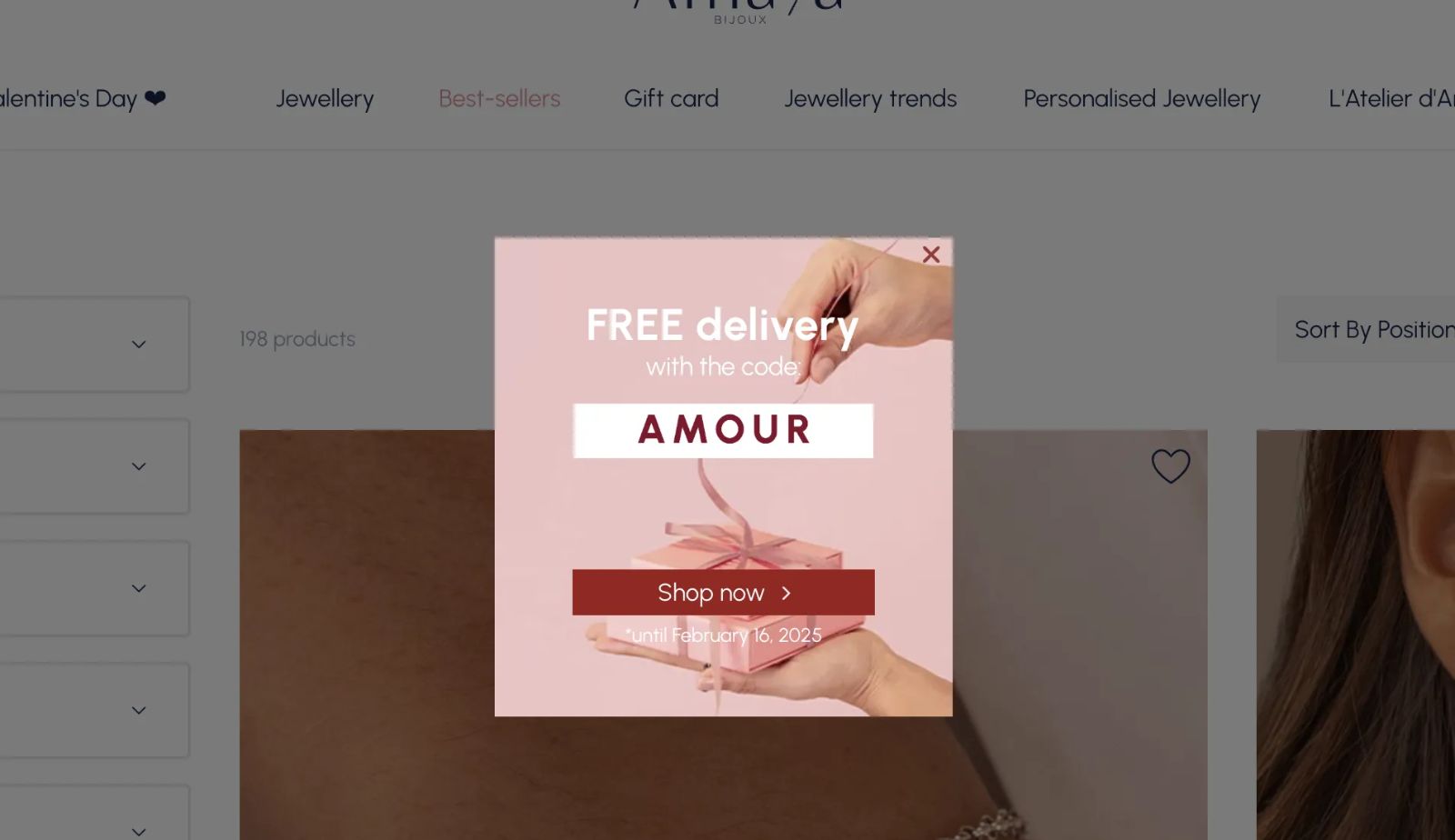
Since shipping costs are such a significant barrier to purchase, this type of popup can be remarkably effective at reducing hesitation and completing sales that might otherwise be lost.
Best for: Reducing cart abandonment and removing a major purchase objection.
5. Customer Referral Popup
Turn your satisfied customers into brand advocates with referral popups. These offer existing customers a discount when they refer friends, creating a win-win situation where both the referrer and the new customer receive benefits.
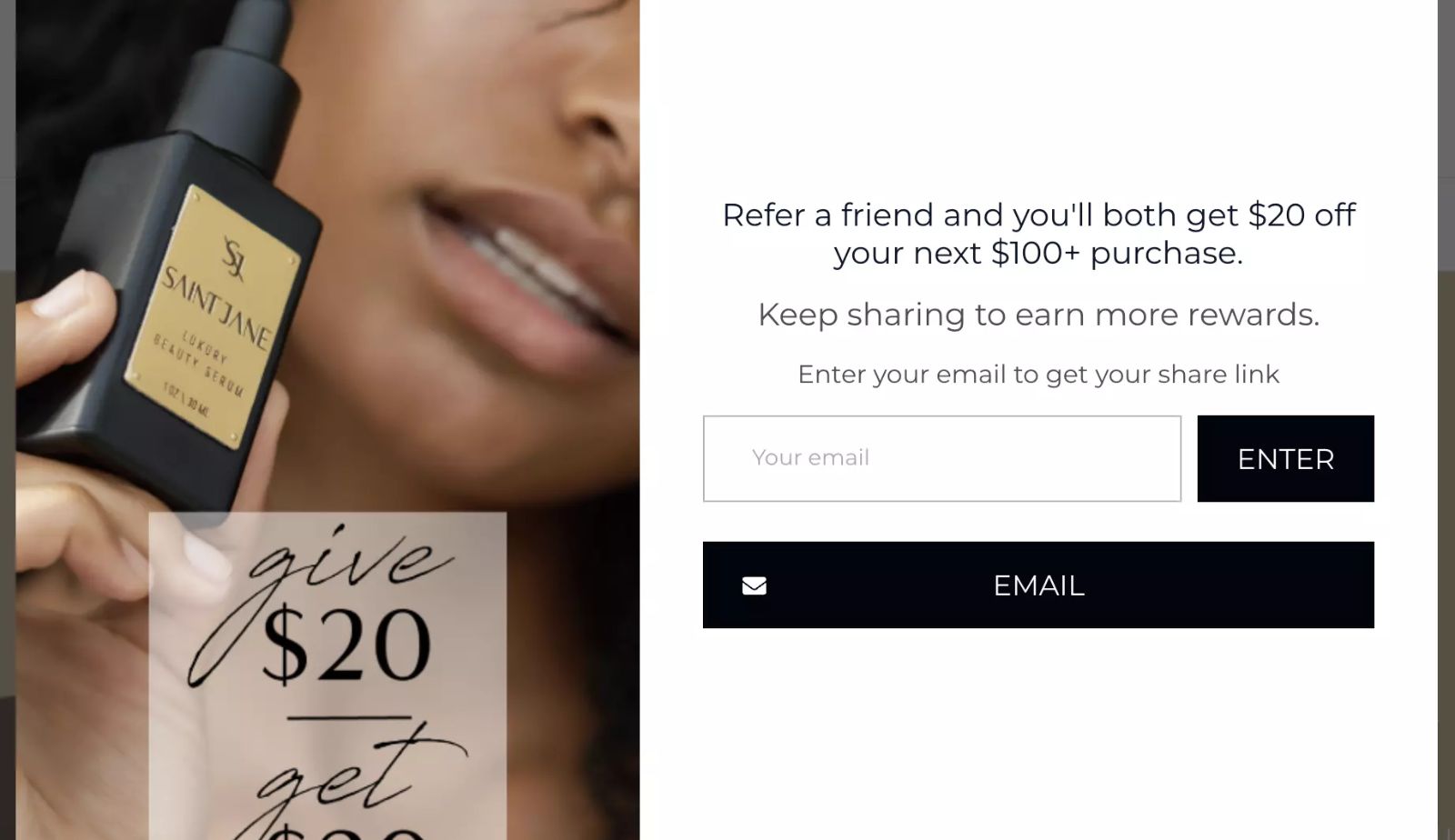
Referral programs leverage social proof and personal recommendations, which are far more powerful than traditional advertising. Customers referred by friends also tend to have higher lifetime value and loyalty.
Best for: Growing your customer base through word-of-mouth and rewarding loyal customers.
8 Real-World Discount Popup Examples & Performance Data
Let’s examine proven strategies from brands that have achieved remarkable results with their discount popup campaigns.
1. Frictionless Email Capture
Strategy: Luxury beauty brand Patrick Ta simplified their popup to collect only email addresses, removing friction points that might deter high-end customers.
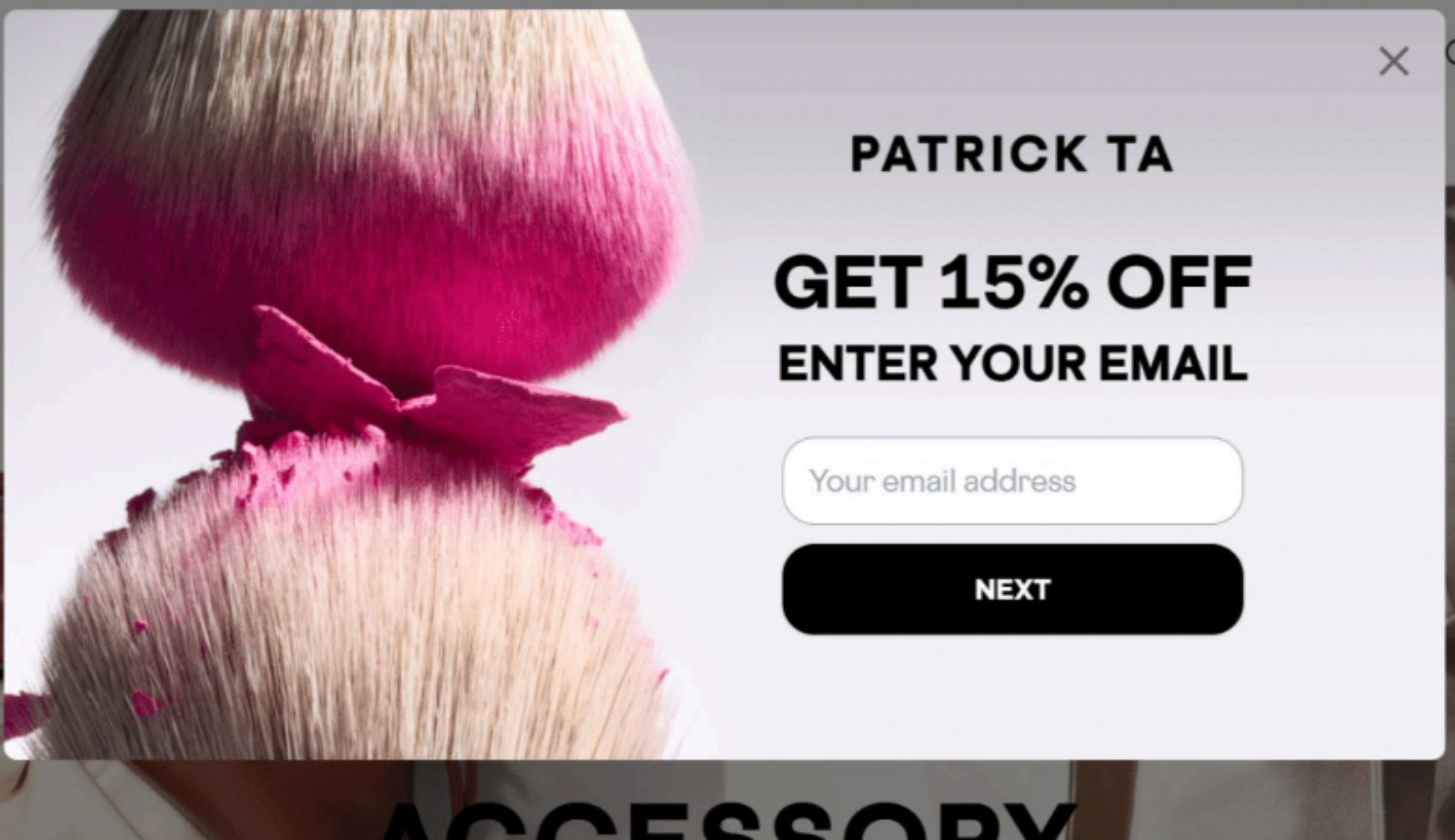
Results: This streamlined approach generated a 167% increase in signups and drove $600,000 in attributed revenue. The lesson? Sometimes less truly is more, especially when your brand positioning emphasizes premium quality over aggressive discounting.
2. Interactive Two-Step Funnels
Strategy: Instead of a standard “get 10% off” popup, Batch CBD engaged visitors with wellness-focused questions about their health goals before revealing the discount.
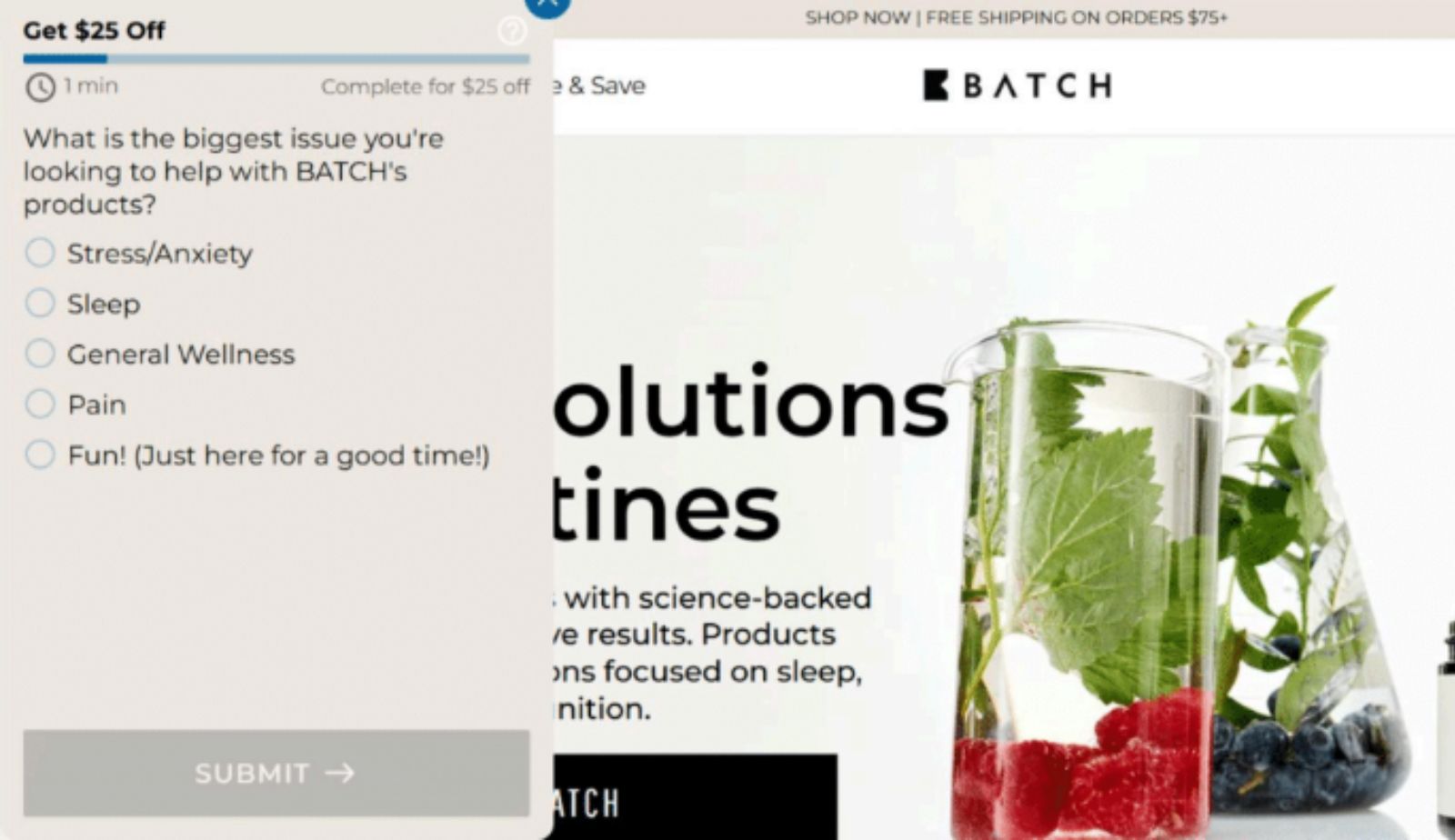
Results: This interactive approach achieved a 260% increase in signups and a remarkable 43% purchase rate from new subscribers. By collecting zero-party data (information customers voluntarily share), they enabled highly personalized follow-up marketing.
3. Large-Scale Data Collection
Strategy: Essence Vault incorporated a simple segmentation question asking visitors about their gender preferences, allowing for more targeted product recommendations.
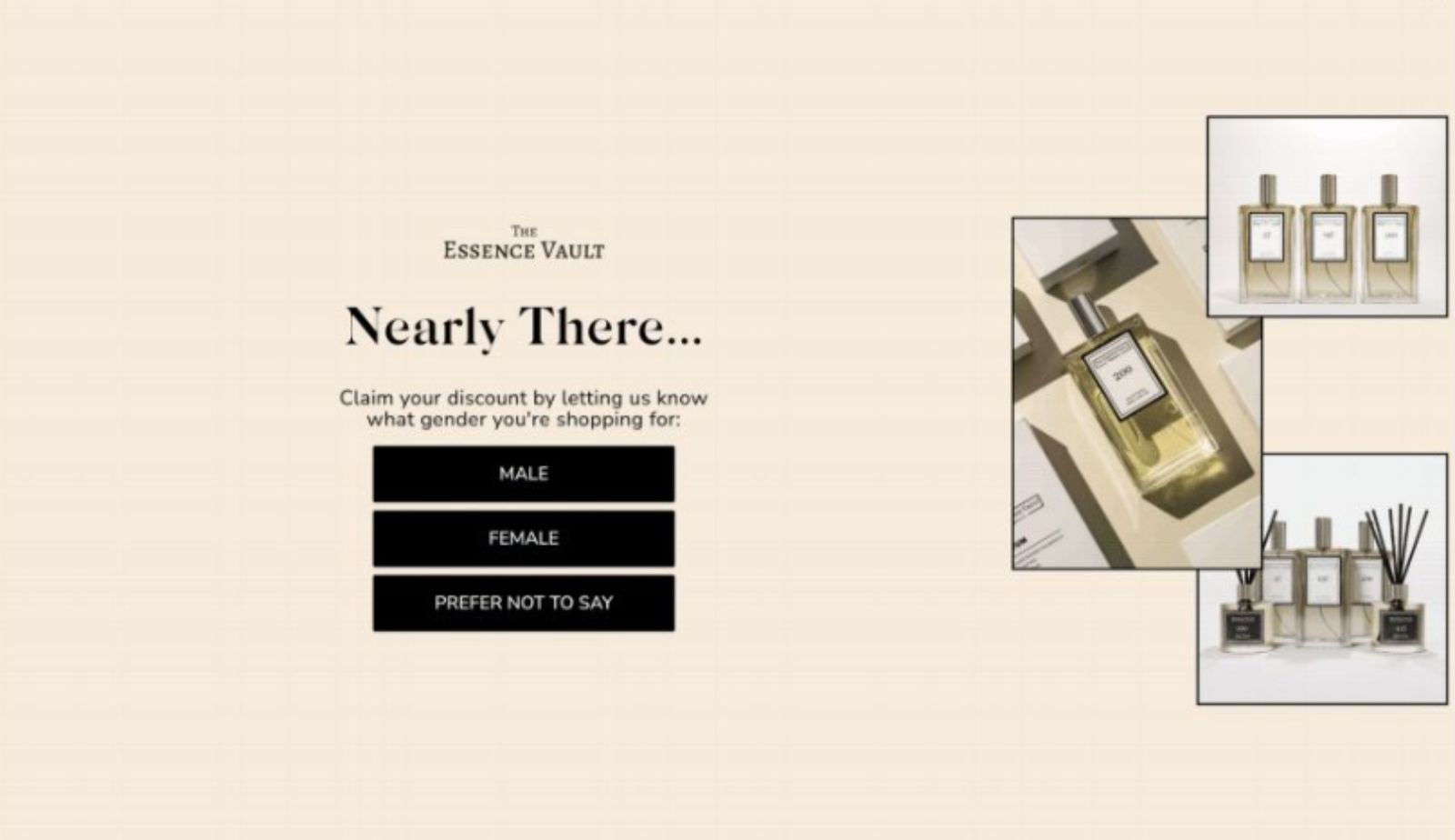
Results: This single additional question didn’t hurt conversions, instead, it helped them collect 360,000 emails in just one month while simultaneously building valuable customer segments.
4. Multi-Step Education
Strategy: Firebelly Tea implemented a “lesson-based” discount popup that educated visitors about tea benefits across multiple steps before revealing the incentive.
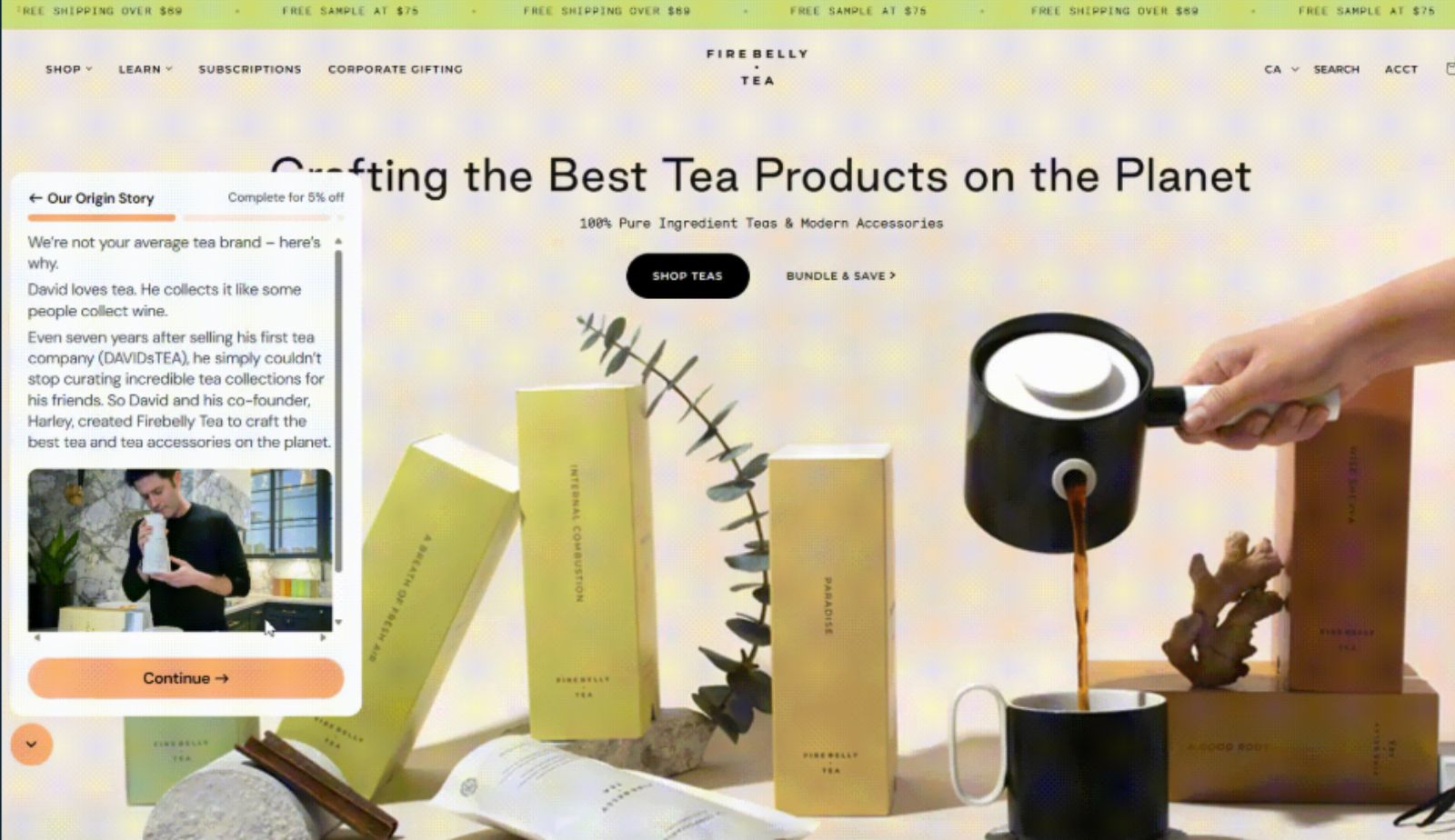
Results: This educational funnel doubled their signup rate and generated $13,000 in incremental revenue, demonstrating that patience and value-delivery can outperform aggressive discounting.
5. Story-Led Floating Buttons
Strategy: Rather than an intrusive full-screen popup, Urban Smokehouse used a compact, floating card that shared the founder’s story and remained visible without blocking content.
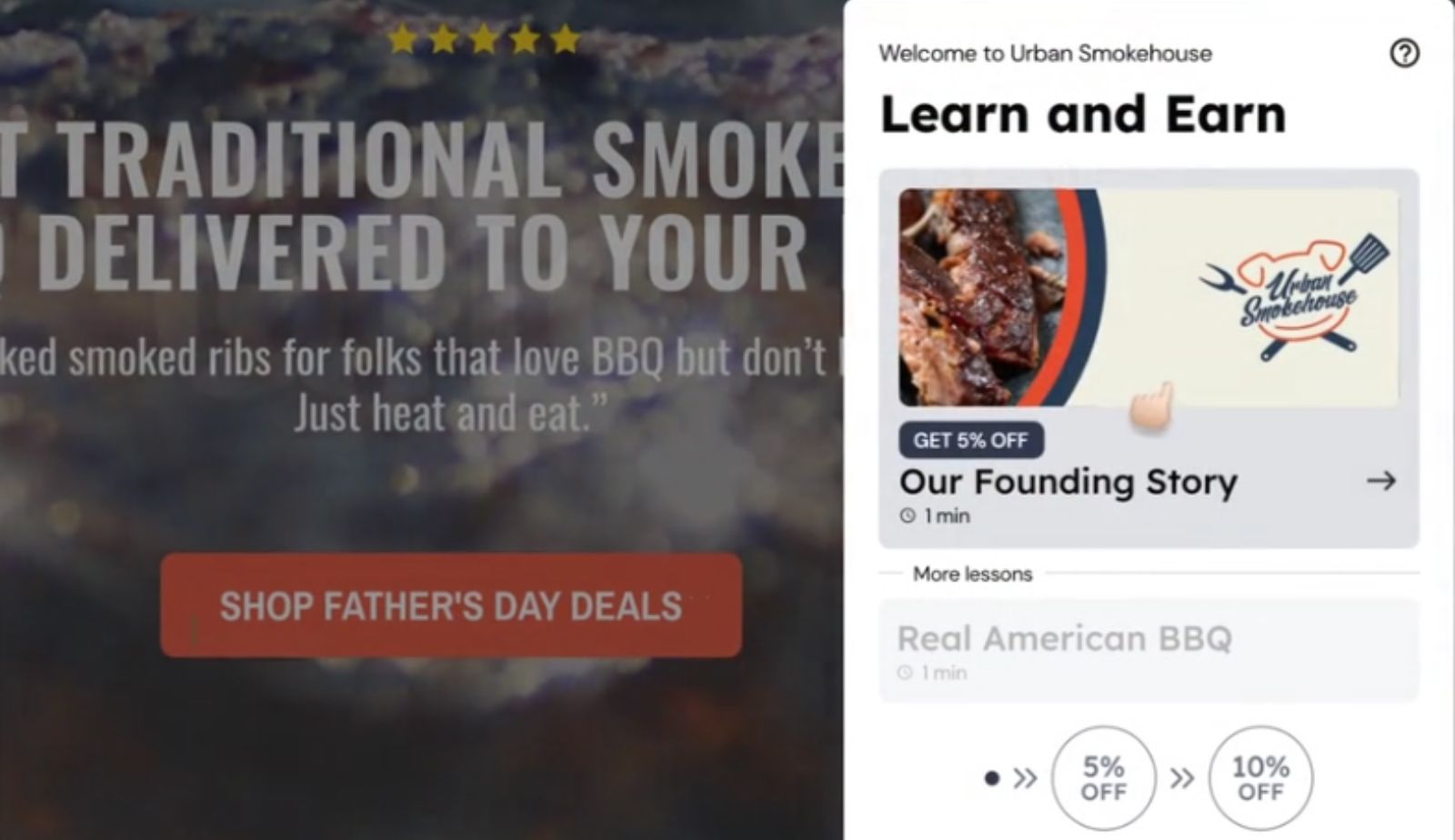
Results: This non-intrusive approach drove over $100,000 in additional monthly sales, showing that you don’t always need to interrupt the browsing experience to achieve results.
6. Quiz-Based Mystery Offers
Strategy: ZQuiet leveraged curiosity by promising a mystery discount amount based on quiz answers, creating anticipation and engagement.
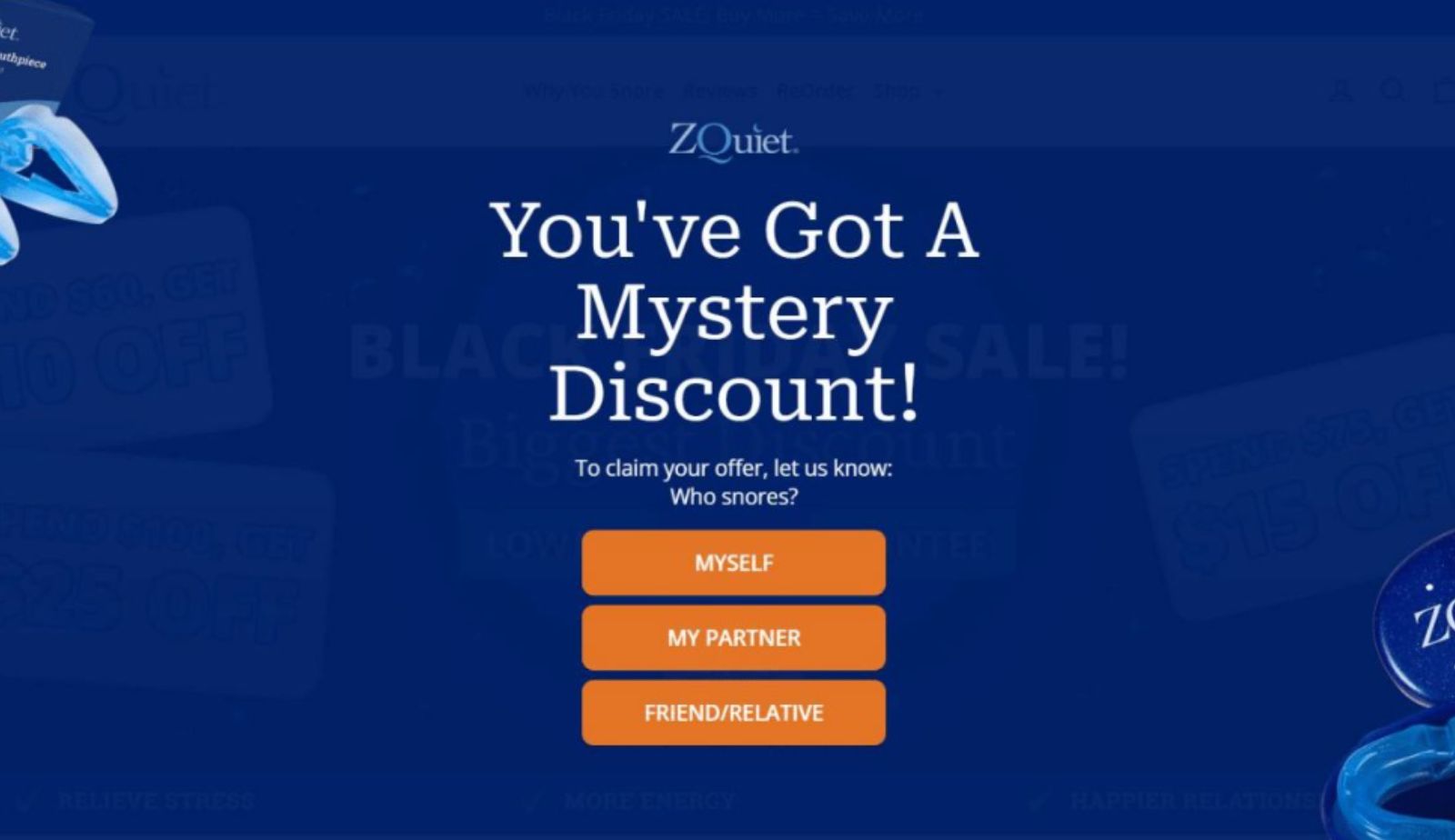
Results: Their signup rate skyrocketed from 2.5% to 19% – a nearly 8x improvement by making the discount reveal feel like an exciting discovery rather than a transactional exchange.
7. Urgency-Driven Offers
Strategy: Plant-based milk brand JOI added “Limited Time Offer” messaging to create scarcity and motivate immediate action.
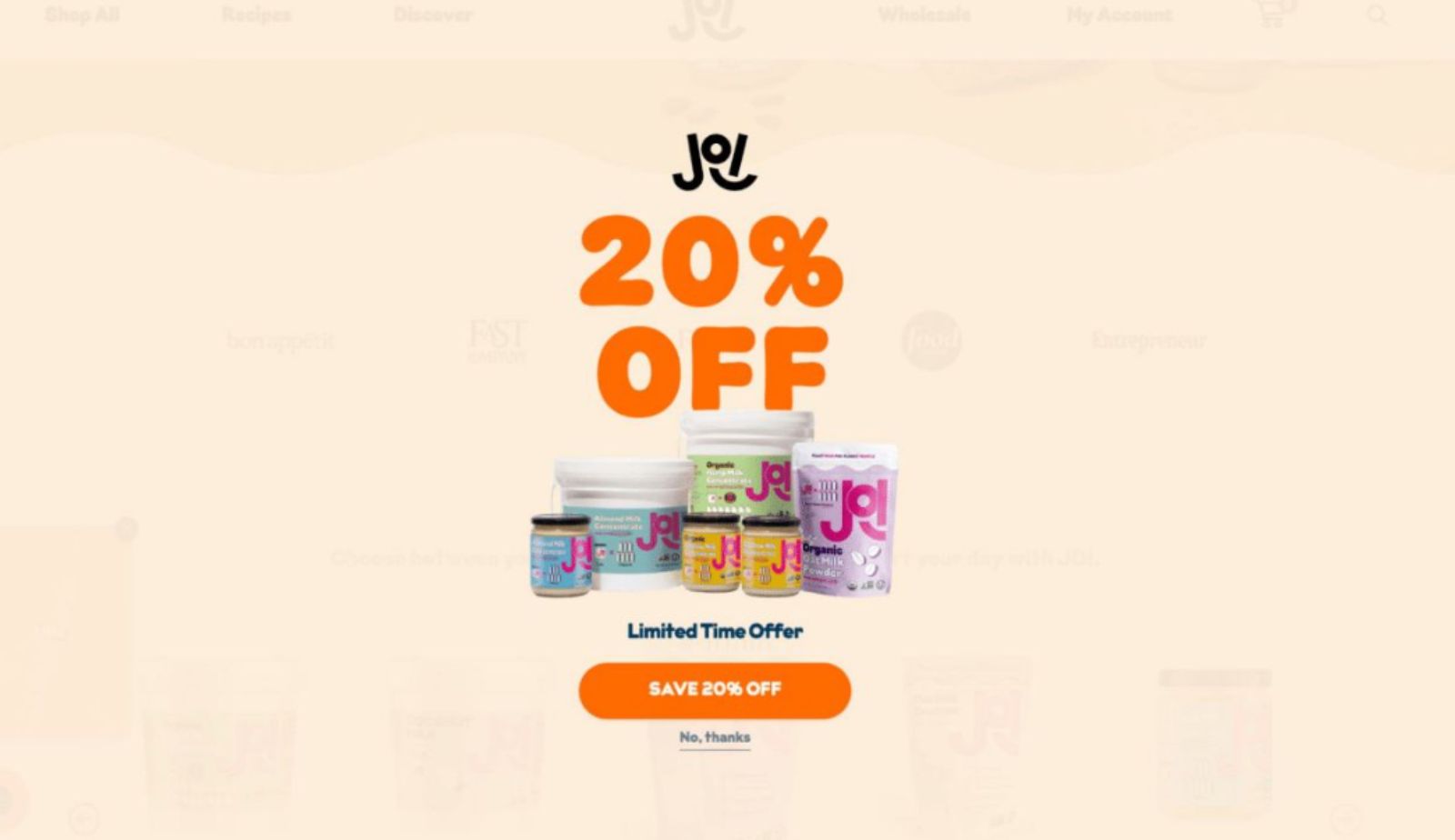
Results: The urgency messaging increased email signups by 36%, demonstrating that FOMO (fear of missing out) remains a powerful psychological trigger when used authentically.
8. Intent-Based Personalization
Strategy: Create asked benefit-based questions to understand what visitors were looking for, then personalized the discount offer accordingly.
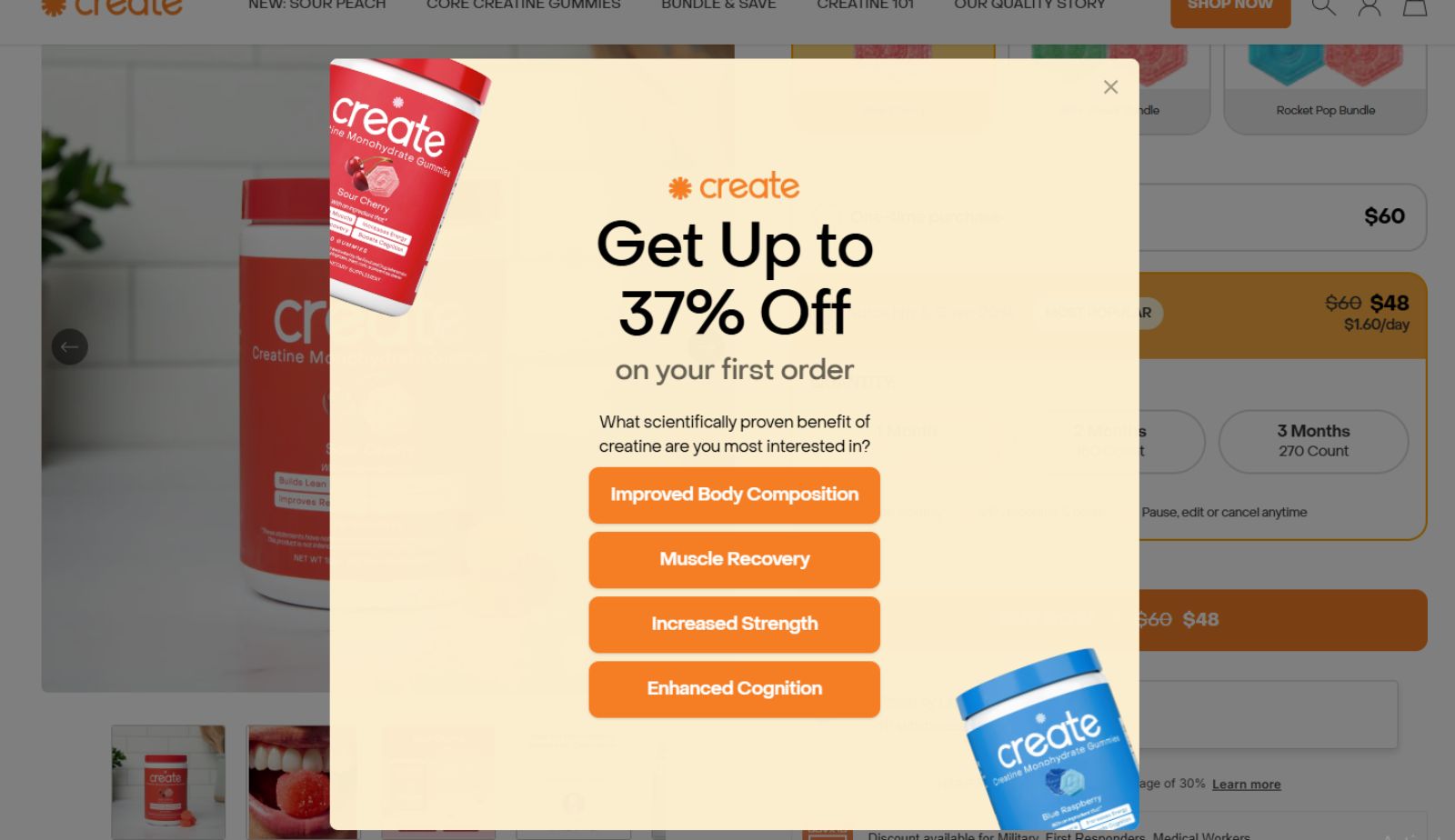
Results: This sophisticated segmentation approach achieved an 18% signup rate – well above the 2-5% industry average – by making every visitor feel the offer was tailored specifically for them.
Choosing the Right Discount Popup Platform: Key Features & Capabilities
Your discount popup platform choice directly impacts your results. Here’s what separates the best from the rest:
TA Banner Slider, Sale Popup
Best for: Brands concerned about popup fatigue or wanting subtle engagement options.
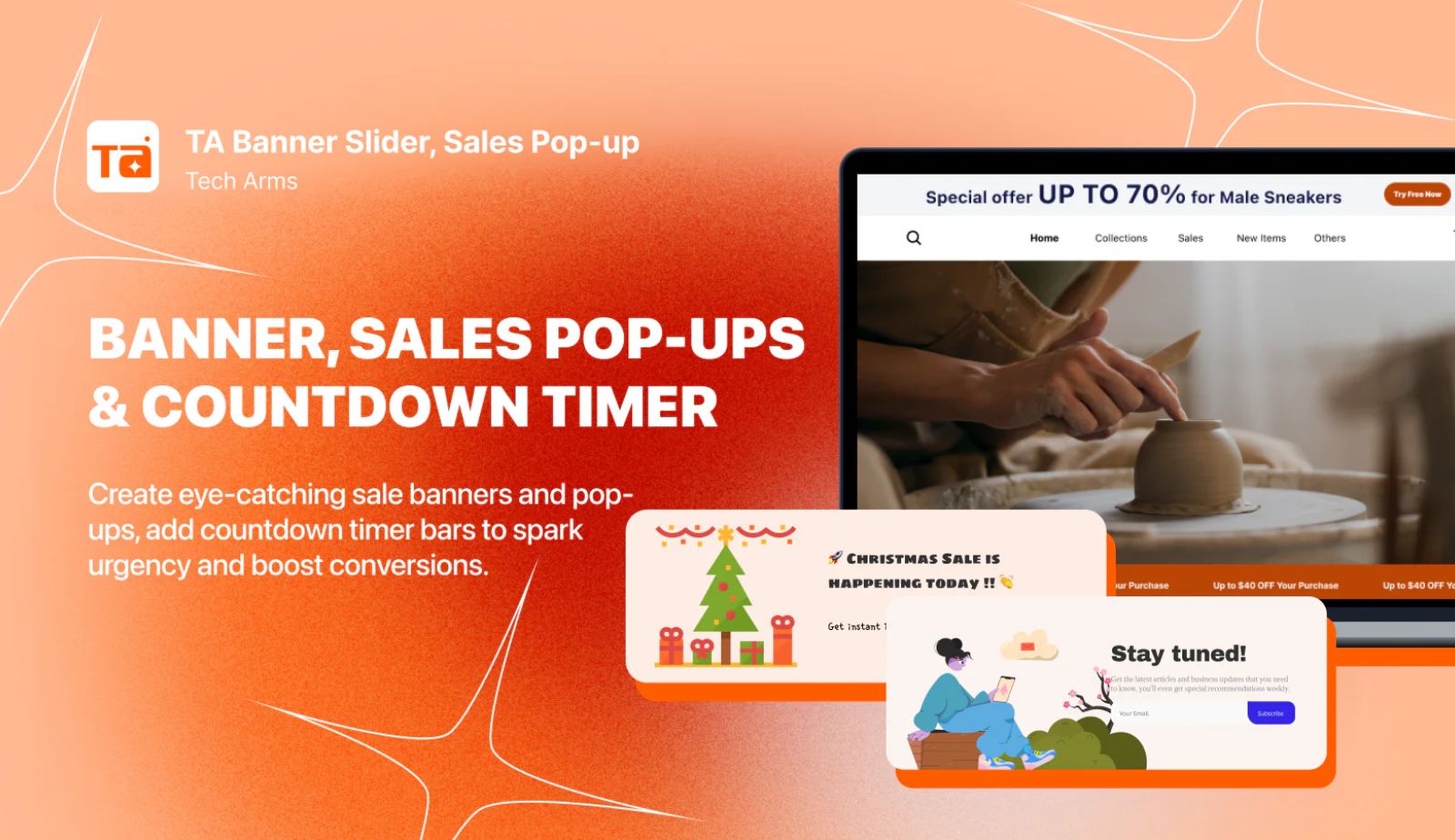
TA Banner, Sales Pop Ups uses card-style floating buttons that don’t block screen content, allowing visitors to explore at their own pace. Urban Smokehouse leveraged this approach to generate over $100,000 in extra monthly sales without the aggressive interruption of traditional popups.
Alia
Best for: 7-9 figure brands ready to maximize conversion through intelligent automation.
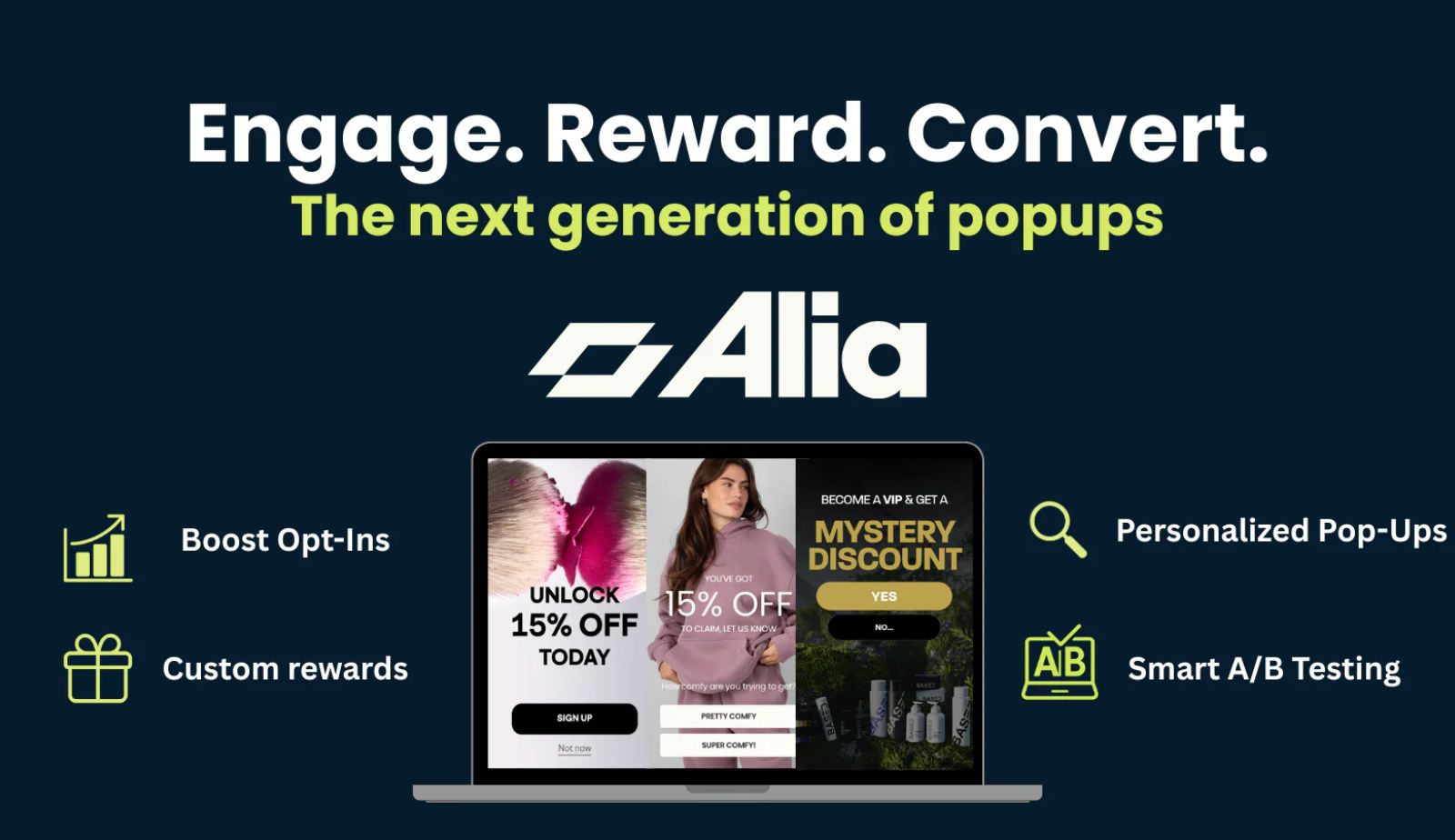
Alia stands out with AI-powered smart triggering that learns from visitor behavior, multi-step storytelling flows that build connection before asking, and automatic A/B testing that continuously optimizes performance. Brands using Alia average 15-20% opt-in rates, and Hostage Tape achieved their 143x ROI using Alia’s exit-intent capabilities.
Key differentiator: The platform’s AI doesn’t just trigger popups, it learns which visitors are most likely to convert and adjusts timing, messaging, and offers accordingly.
Wisepops
Best for: Brands wanting deep customization and context-aware display rules.
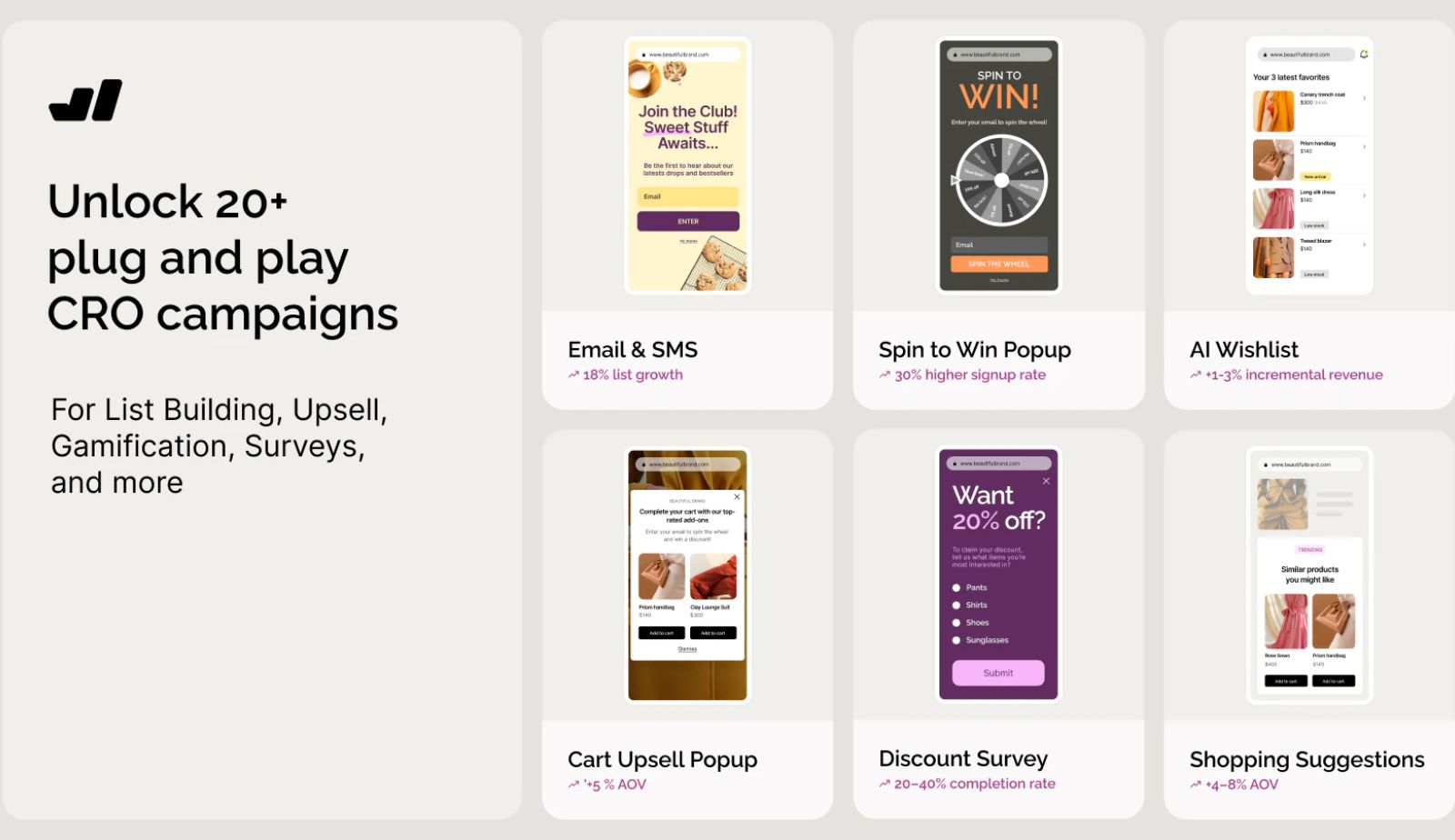
With over 150 templates, AI-powered product recommendations, and sophisticated audience targeting, Wisepops enables incredibly specific popup campaigns. Their gamified wheel popups achieve up to 30% conversion rates when properly implemente
FAQ
Not if implemented correctly. Google’s algorithm penalizes intrusive interstitials that block content, but discount popups that are easy to dismiss, don’t cover the entire screen, and appear after initial content loads are perfectly fine. Follow mobile best practices: 85% screen width, easy-to-tap close buttons, and avoid immediate triggers.
It depends on visitor type and device. For new desktop visitors, start with a 30-45 second delay or exit-intent. For returning visitors who didn’t convert, use exit-intent exclusively. For mobile, use 50% scroll depth as your primary trigger. Never trigger immediately, give visitors a chance to experience your site first.
Test your way to the answer, but most brands find 10-15% to be the sweet spot. Higher percentages (20%+) rarely convert significantly better but heavily impact margins. Consider offering free shipping instead, it’s perceived as highly valuable but often costs less than percentage discounts.
No. Segment your popups based on traffic source, device type, new vs. returning visitors, and browsing behavior. A visitor from a Facebook ad should see different messaging than someone arriving from organic search. Personalization increases conversion rates by 20-30%.
Conclusion
The discount popup has evolved from a simple email capture tool to a sophisticated conversion optimization system that segments audiences, builds relationships, and drives measurable revenue growth. The brands seeing the best results aren’t using generic “15% off” popups, they’re implementing strategic, multi-step experiences that provide value, collect zero-party data, and create positive first impressions.
Use smart exit-intent technology and engaging discount popups to recover lost sales. Whether you choose TA Banner Slider for non-intrusive visibility or any other apps for high-urgency promotions, the right tool can transform your conversion rates.

Hi, I’m Vu Cam Chi – a detail-driven digital marketer focused on building practical growth solutions for ecommerce and digital products. I combine data, user behavior, and clear messaging to turn ideas into results. Strategy guides my decisions, and optimization is part of my daily work. I care deeply about creating experiences that make sense for users and actually perform.