The 10 Best Product Badges for eCommerce: Strategies to Boost Conversions
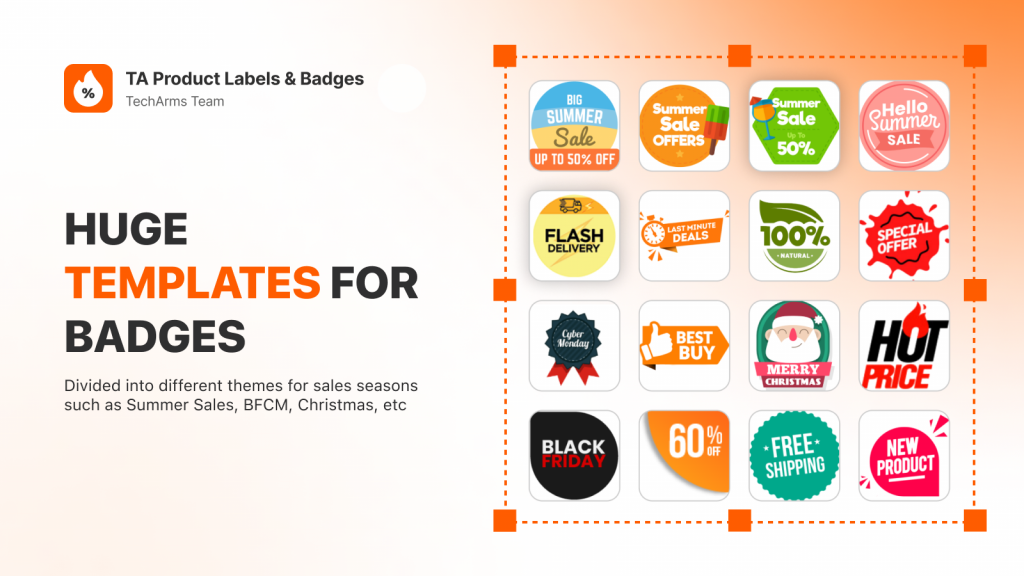
In today’s crowded digital marketplace, capturing customer attention and driving conversions requires more than just quality products and competitive pricing. Product badges have emerged as one of the most effective yet underutilized tools in eCommerce optimization. These small visual elements can increase conversion rates by up to 55%, making them essential for any online store looking to maximize sales and improve customer experience.
What Are Product Badges in eCommerce?
Product badges are visually appealing labels or icons strategically displayed on product images or throughout online store interfaces. These powerful visual markers serve as instant communicators, highlighting essential product attributes, promotional offers, and unique selling points that help products stand out in a saturated marketplace.
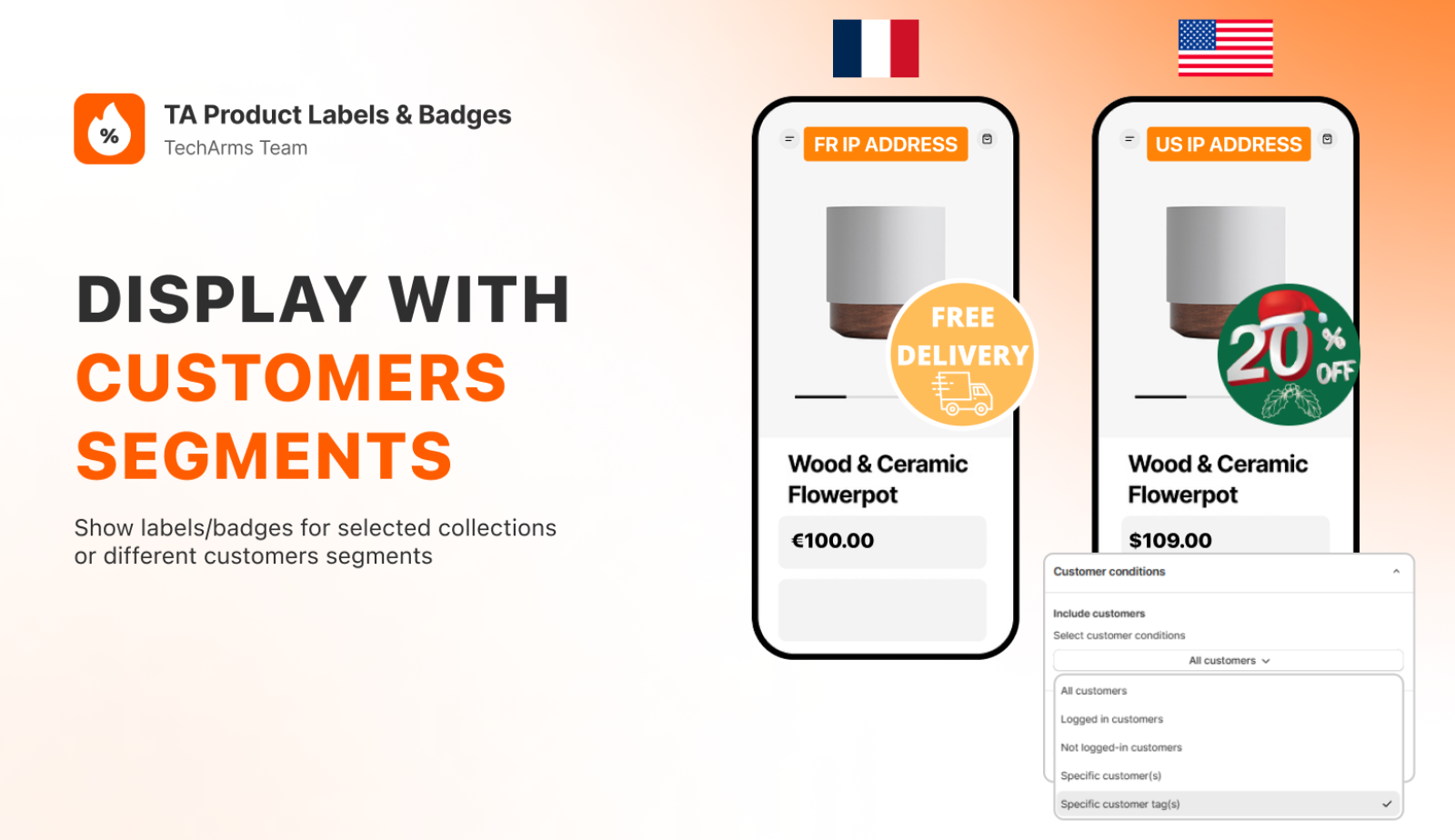
Unlike generic product listings, badges go beyond simply displaying a product and its price. They function as helpful navigational guides for users, immediately showcasing critical information such as availability status, ongoing sales promotions, or special deals. This instant communication is crucial in eCommerce, where customers often scan through dozens of products in seconds.
Besides, it’s important to distinguish between product badges and product labels, although they serve different purposes in the customer journey, many people mistake these two terms as well as their functions. For instance, product badges focus primarily on driving immediate action and creating urgency – such as “Limited Time Deal” or “Only 2 Left.” These typically appear prominently on Product Listing Pages (PLPs) to capture attention quickly. Product labels, conversely, provide more detailed product attributes like “Organic,” “Vegan,” or “Handmade,” offering informational value rather than urgency.
Why Product Badges Are Essential for eCommerce Success?
In today’s digital age, there are a bunch of cost-effective strategies that help in improving conversion rates and sales performance leading to increased profitability and revenue for business and high satisfaction of customer service. In this context, the strategic implementation of product badges delivers measurable benefits that directly impact your bottom line. Understanding these advantages helps eCommerce businesses prioritize badge implementation in their conversion optimization strategy.
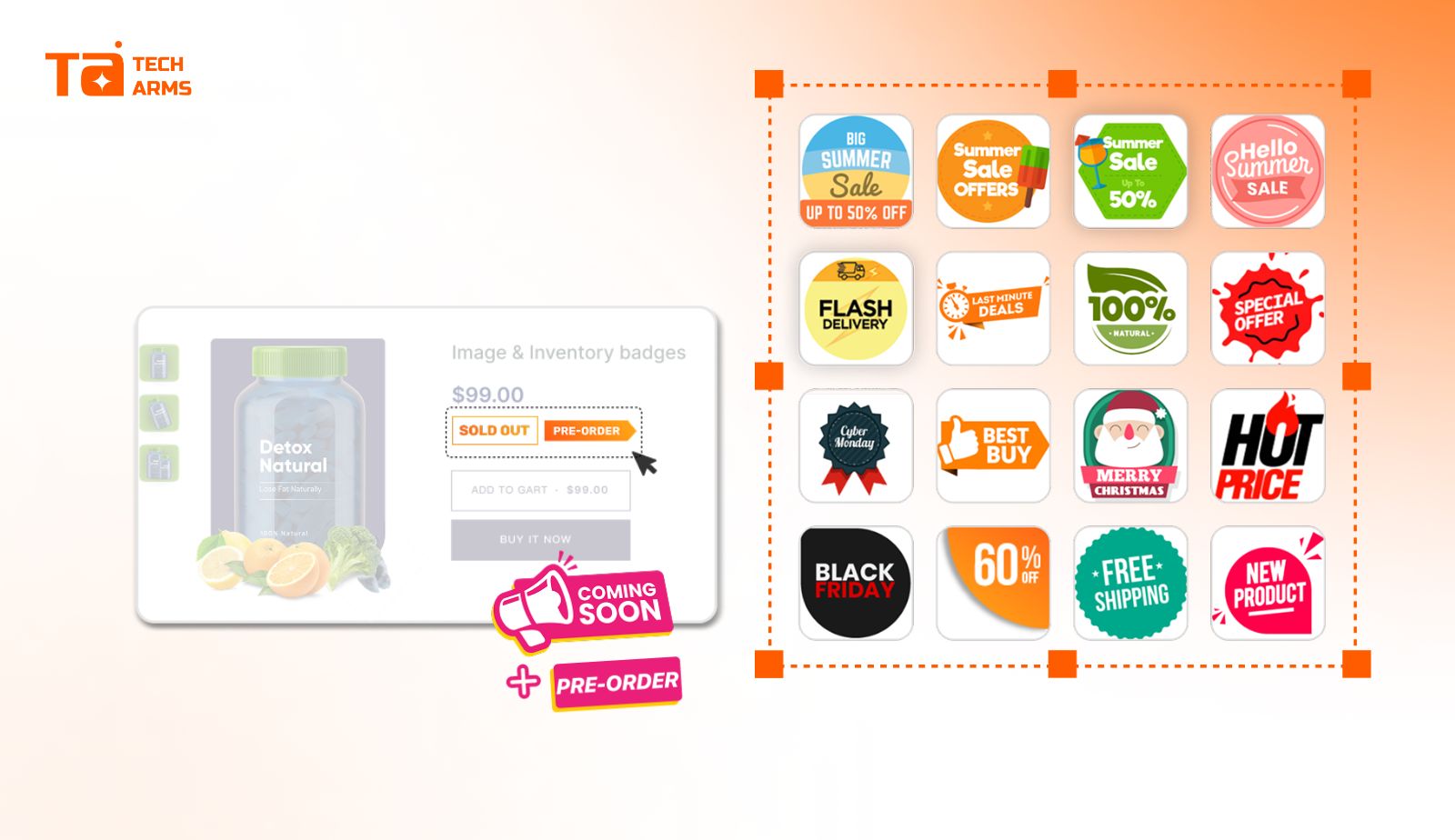
Catch Customer Attention Instantly
In an environment where consumers are bombarded with choices, product badges act as visual cues that immediately draw the eye. They create visual hierarchy on product pages, making certain items stand out in a crowded marketplace. This visual differentiation significantly improves Click-Through Rate (CTR), as customers are naturally drawn to highlighted products.
Boost Conversions Significantly
The statistics speak for themselves: eCommerce websites strategically using product badges experience conversion rate increases of up to 55%. This dramatic improvement stems from badges’ ability to reduce decision-making friction and provide instant clarity about a product’s value proposition. By highlighting the most compelling reasons to buy, badges shorten the path from browsing to purchasing, promoting shoppers to complete their payment.
Create Urgency and Leverage FOMO
Fear of missing out (FOMO) is one of the most powerful psychological drivers not only in society but also in eCommerce recently. Therefore, if you apply labels like “Limited Stock,” “Sale Ends Soon,” or “Only 3 Left” on your online store, they will tap directly into this emotion, encouraging quicker purchasing decisions. When customers believe they might miss an opportunity, they’re significantly more likely to complete a purchase immediately rather than postponing the decision.
Build Trust Through Social Proof
Badges leveraging social proof such as “Top Rated,” “Customer Favorite,” or “Best Seller”, which can reassure shoppers about product quality by showing that others have made the same choice successfully. This psychological principle is fundamental to online shopping, where customers can’t physically examine products before buying. Social proof badges bridge this trust gap effectively.
Convey Key Information Quickly
Despite their compact size, product badges communicate unique selling points or time-limited offers instantly. In an era of decreasing attention spans, this rapid information delivery is invaluable. Badges improve customer understanding and guide purchasing choices without requiring customers to read lengthy descriptions.
Enhance Overall Customer Experience
Well-implemented badges improve website navigation by helping visitors quickly identify products with specific features they’re seeking. Whether customers are hunting for eco-friendly options, new arrivals, or discounted items, badges create efficient pathways through your product catalog, reducing browsing frustration and improving satisfaction.
The 9 Best Product Badges for eCommerce
The design of product badges in ecommerce vary from website to website, because every merchants want to express their unique brand identity and experiment with what captures customer attention and motivates sales. As a result, you can see a wide range of product badges, which is a great source of inspiration.
In this section of the blog, we will walk you through 10 different types of product badges and see how they are used for different purposes to reach maximum impact.
1. The Social Proof Powerhouse: Best Seller Badges
Best seller badges represent one of the most influential types of product badges in eCommerce. These badges highlight popular items, creating immediate trust and encouraging customers to choose proven favorites over unknown alternatives.
Examples in Action: Amazon’s iconic “Best Seller” badge has become synonymous with product quality and reliability. Other variations include “Top Rated,” “Customer Favorite,” “Most Popular,” and “#1 in Category.”

The Mechanism Behind Success: Best seller badges signal high demand and product reliability, reassuring potential buyers that their purchase is a solid, validated choice. This form of social proof is particularly effective for new visitors who lack familiarity with your brand or product line. When customers see that hundreds or thousands of others have chosen the same product, it dramatically reduces perceived risk and accelerates decision-making.
Best seller badges work exceptionally well for stores with high traffic volumes where genuine bestsellers emerge naturally. They’re most effective when updated regularly to reflect current sales data, maintaining authenticity and relevance.
2. The Urgency Driver: Limited Stock & Selling Fast Badges
Scarcity is a fundamental principle of persuasion, and limited stock badges leverage this principle masterfully. These badges create FOMO by communicating that an item is almost sold out, pushing hesitant customers toward immediate action.
Examples in Action: Home Depot effectively uses “Only 3 Left in Stock” to create urgency on high-demand items. Khy, Kylie Jenner’s fashion brand, employs “Few Items Left” badges prominently on their product pages. Other variations include “Limited Stock,” “Selling Fast,” “Almost Gone,” and “Low Inventory.”

The Mechanism Behind Success: Limited stock badges tap into loss aversion – the psychological principle that people feel the pain of losing an opportunity more intensely than the pleasure of gaining something. When customers see that stock is running low, they’re motivated to act quickly to avoid missing out entirely. This badge type is particularly effective for products with genuine inventory constraints, limited editions, or seasonal items.
For maximum impact, please ensure your limited stock badges reflect actual inventory levels. Dynamic badges that update in real-time based on your inventory management system maintain credibility and prevent customer disappointment from false scarcity claims.
3. The Price Appeal: Discount and Sale Badges
Offering price discounts to boost the sales of particular products is a widely acknowledged and well-documented strategy in marketing research (Haans & Gijsbrecht, 2011; Sotgiu & Gielens, 2015), and discount badges capitalize on this by making price reductions immediately visible. These badges highlight price reductions, allowing customers to spot deals effortlessly while browsing.
Examples in Action: Effective discount badges include specific percentage indicators like “50% Off,” time-sensitive promotions such as “Sale Ends Soon,” categorical clearances labeled “Clearance Sale,” and daily specials marked as “Deal of the Day.”

The Mechanism Behind Success: Discount badges grab attention through high-contrast colors (typically red or yellow) and appeal directly to price sensitivity. They create a value perception that extends beyond the actual discount amount. Studies show that customers perceive greater savings when discounts are displayed prominently with badges rather than only in the price comparison.
One helpful tip is that sale badges work best when combined with countdown timers or end dates, adding temporal urgency to the price appeal. They’re particularly effective during major shopping events like Black Friday, Cyber Monday, or seasonal clearance periods when customer purchase intent is already elevated.
4. The Newness Magnet: New Arrival Badges
New arrival badges attract attention to the latest additions in your store, capitalizing on customers’ natural curiosity about fresh inventory and the latest trends.
Examples in Action: Dick’s Sporting Goods prominently features simple “New” badges on recently added merchandise. Other effective variations include “New Arrival,” “Just In,” “Latest Addition,” and “Fresh Stock.”

The Mechanism Behind Success: New arrival badges attract two valuable customer segments: early adopters who pride themselves on owning the latest products, and repeat customers who regularly check back for fresh inventory. These badges help prevent “banner blindness” by continuously refreshing your product presentation with genuinely new content.
For fashion and technology eCommerce stores, new arrival badges are particularly crucial. They align with customer expectations in these categories where newness directly correlates with desirability. Time-limit these badges (typically 30-60 days after product launch) to maintain the integrity of newness and avoid badge fatigue.
5. The Friction Remover: Free Shipping Badges
Shipping costs represent one of the primary reasons for cart abandonment in eCommerce. According to research by the Baymard Institute, 48% of users abandon their shopping carts because the extra costs, such as high shipping fees, taxes, and other fees, were too high or unexpected. Hence, free shipping badges directly address this friction point.
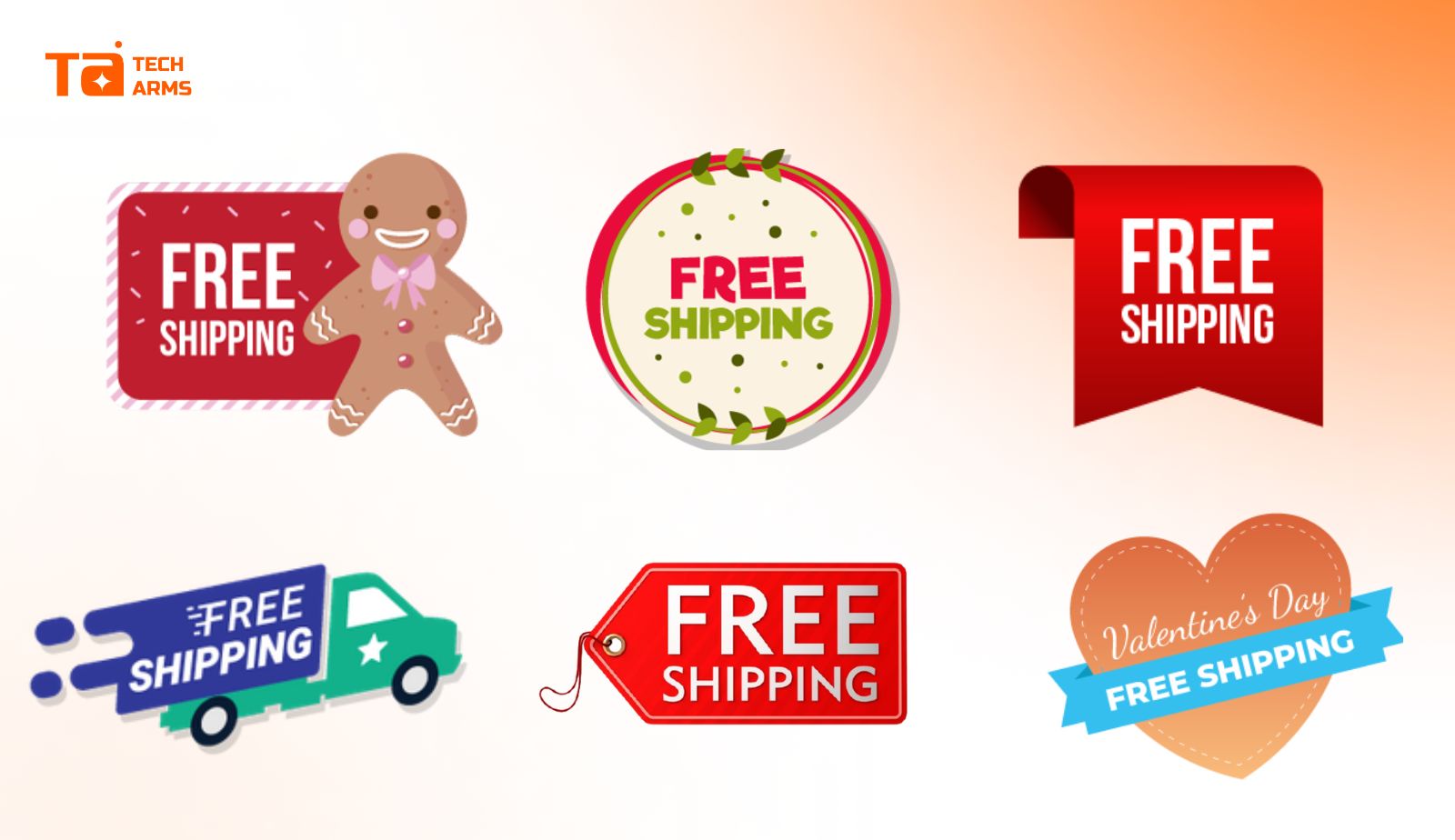
Examples in Action: Wayfair effectively promotes “Free 1-Day Delivery” badges on qualifying products, making the shipping benefit impossible to miss. Other variations include “Free Shipping,” “Ships Free,” “No Delivery Charge,” and “Free 2-Day Shipping.”
The Mechanism Behind Success: Free shipping badges assure customers of added value and eliminate a major hesitation point in the purchasing process. They’re particularly powerful because they address a concrete pain point rather than just highlighting product attributes. Customers often perceive free shipping as significant savings, sometimes valuing it more highly than equivalent price discounts.
We recommend you to use these badges with minimum order thresholds (“Free Shipping Over $50”), which can exceptionally encourage customers to add more items to their carts to qualify for the benefit. What is more, display these badges both on product listing pages and in shopping carts for maximum impact.
6. The Confidence Booster: Money-Back Guarantee Badges
For many online shoppers, the inability to physically examine products before purchase creates hesitation. Money-back guarantee badges directly address this concern by assuring customers of risk-free purchases. Customers who purchase with the safety net of a guarantee have potential to become repeat buyers, even if they never actually use the return option
Examples in Action: Effective guarantee badges include “30-Day Money-Back Guarantee,” “100% Satisfaction Guaranteed,” “No-Risk Trial,” “Easy Returns,” and “Love It or Return It Free.”

The Mechanism Behind Success: These badges boost purchasing confidence by transferring risk from the customer to the retailer and showcase transparency of the price policy. They signal that the company stands behind its products and values customer satisfaction above all. This confidence-building is particularly crucial for higher-priced items, new product launches, or first-time customers unfamiliar with your brand.
7. The Trust Seal: Secure Badges
With increasing concerns about online payment security and data breaches, secure badges reassure customers that their transactions and personal information are protected, particularly during the critical checkout phase.
Examples in Action: Widely recognized secure badges include “Secure Checkout,” “SSL Encrypted,” “100% Payment Protection,” “Verified Secure,” trusted payment processor logos (PayPal, Stripe), and security certificate indicators (Norton, McAfee).

The Mechanism Behind Success: Security badges build trust and reduce hesitation during the purchasing process by addressing fundamental concerns about online transaction safety. They combat cart abandonment that stems from security concerns rather than price or product hesitation. These badges are particularly important for newer eCommerce sites that haven’t yet established strong brand recognition.
Display security badges prominently on product pages, in shopping carts, and especially on checkout pages. Third-party security certifications (like Norton Secured or McAfee Secure) carry more weight than generic security claims, as they provide independent verification of your security measures.
8. Event-Driven: Seasonal or Holiday Badges
Seasonal and holiday product badges capitalize on specific shopping periods by adding timeliness, celebration, and urgency to your product promotions. These badges align your products with the festive mood and heightened purchase intent that accompanies holidays.
Examples in Action: Baby Brezza effectively uses “Merry Christmas Sale” badges during the holiday season. Other variations include “Holiday Special,” “Black Friday Deal,” “Cyber Monday Exclusive,” “Valentine’s Day Gift,” “Back to School,” and “Summer Clearance.”
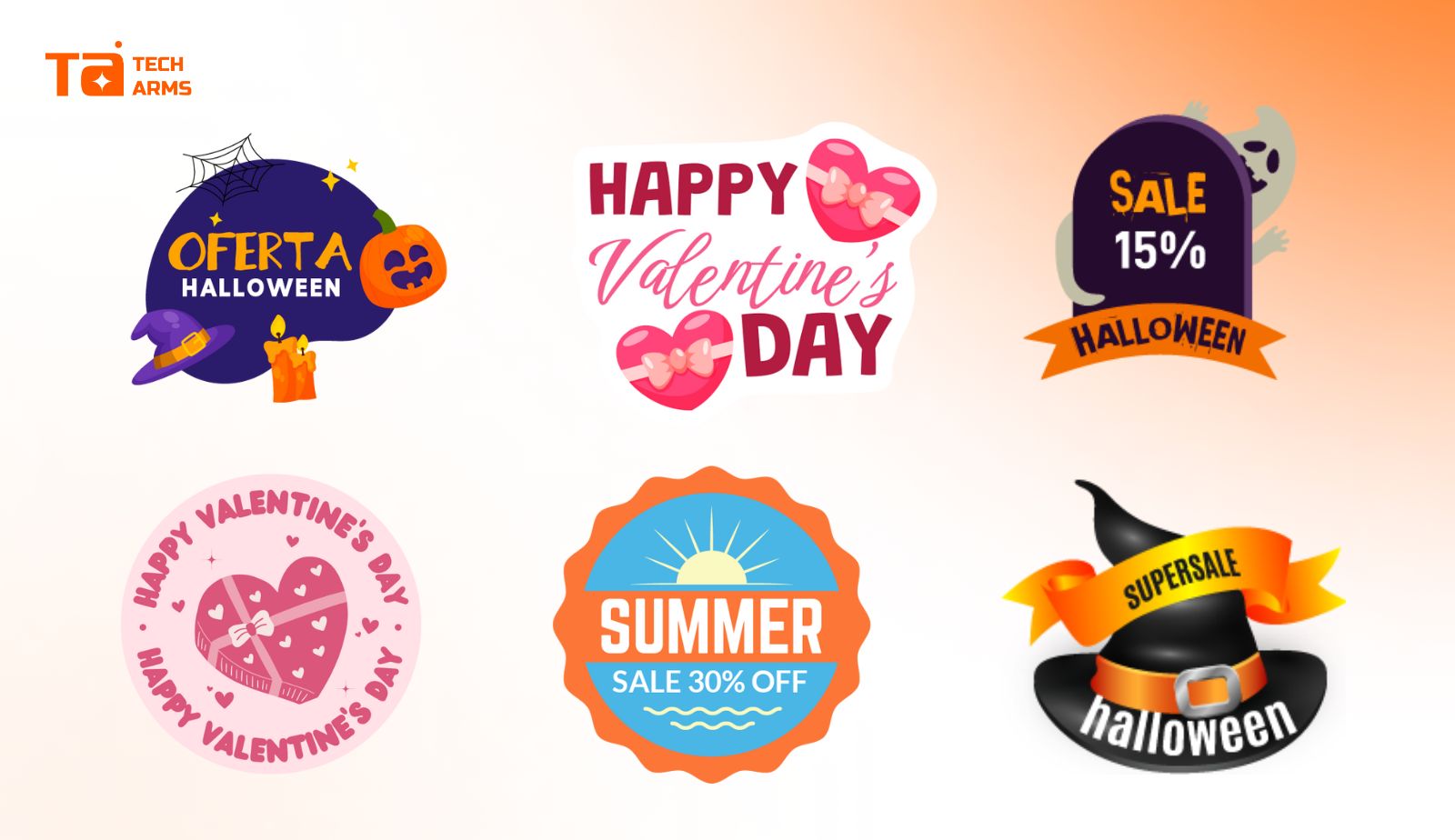
The Mechanism Behind Success: Event-driven badges enhance the shopping experience by connecting purchases to occasions, celebrations, or specific needs. They help customers identify gifts or seasonal necessities quickly. These badges are particularly effective because they combine multiple persuasion principles: urgency (limited-time seasonal windows), relevance (aligned with customer’s current needs), and emotion (connected to celebrations or events).
Time these badges carefully to match actual shopping patterns for each holiday or season. Begin displaying them early enough to capture planning shoppers but not so early that urgency is diminished. Remove them promptly after the event to maintain credibility and avoid appearing outdated.
9. Attribute and Values: Quality or Material Badges
Quality and material badges highlight niche-specific attributes, helping customers who filter by particular features, values, or preferences. These badges appeal to specific customer segments with specialized needs or values.
Examples in Action: Effective attribute badges include “Eco-Friendly,” “Organic,” “Cotton,” “Award-Winning Product,” “Vegan,” “Cruelty-Free,” “Made in USA,” “Handmade,” “Sustainable,” and “Hypoallergenic.”

The Mechanism Behind Success: These badges appeal to customers with specific requirements or values-based shopping criteria. For environmentally conscious buyers, “Eco-Friendly” or “Sustainable” badges instantly identify products that align with their values, saving browsing time and improving satisfaction. These badges also improve site navigation by serving as visual filters, helping customers quickly locate products meeting their specific criteria.
Attribute badges are particularly valuable in crowded product categories where differentiation is challenging. They help niche products find their ideal customers and justify premium pricing by highlighting unique qualities. Ensure all attribute claims are verified and accurate, as values-conscious consumers are likely to investigate claims and will quickly abandon brands that greenwash or make false claims.
10. Value Maximizer: Bundle Deal & Multi-Buy Badges
Bundle deal and multi-buy badges highlight products that offer enhanced value when purchased together or in quantities, encouraging customers to increase their order size while feeling they’re getting a better deal.
Examples in Action: Electronics retailers use “Bundle & Save” badges on items sold with complementary accessories. Other effective variations include “Complete the Set,” “Frequently Bought Together,” “Multi-Pack Savings,” “Kit Available,” and “Bundle Discount.”

The Mechanism Behind Success: Bundle badges tap into the powerful principle of perceived value maximization. Customers feel they’re making smarter purchasing decisions by getting more for their money, even if they’re ultimately spending more than initially planned. These badges increase average order value (AOV) while making customers feel savvy rather than upsold. The psychology works because bundles reframe the purchase from a single-item transaction to a value opportunity. Instead of thinking “Do I need this product?” customers shift to “Am I getting the best value available?” This mental reframing reduces price sensitivity and increases willingness to spend.
Best Practices for Using Product Badges Effectively
Strategic implementation of product badges requires thoughtful planning and ongoing optimization, not just chasing the shadow. Here we provide you the best practices to maximize badge effectiveness while maintaining credibility and user experience.
Choose the Right Badges for Each Product
Remember that not all product badges suit every product. Selecting badges that genuinely reflect product attributes or current circumstances is of importance. Use “New Arrival” exclusively for recent additions, “Limited Edition” only for genuinely limited items, and “Best Seller” only for products with verified high sales volumes. Mismatched badges can accidentally damage credibility and customer trust.
Strategic Placement Matters
Badge placement significantly impacts visibility and effectiveness of the whole website as well as visitor intuition. For example, position badges at the top corners of product images where they’re immediately visible without obstructing key product details. The top-left corner typically performs best in Western markets where reading patterns naturally start there. If you are not sure what is the most effective position, you can implement A/B testing to identify what works best for your specific audience and product types.
Optimize for Mobile Devices
With mobile commerce continuing to grow, ensuring badges display properly on smartphones and tablets is non-negotiable. Before the going live of your ecommerce website, don’t forget to test badge legibility across various screen sizes to make the most of visibility, ensuring text remains readable and icons stay recognizable. In case mobile users often browse more quickly than desktop users, making immediately visible, well-designed badges are even more critical.
Avoid Visual Clutter
The truth is that more isn’t always better with product badges. It could be better to limit displays to one or two well-placed badges per product image. Excessive badges create visual clutter, confuse customers about which message is most important, and reduce the impact of each individual badge. If a product qualifies for multiple badges, you should prioritize based on what drives conversions most effectively for your audience.
Maintain Honesty and Authenticity
Never use deceptive badges or false scarcity tactics. Customers quickly recognize manipulation, and the long-term damage to brand reputation far outweighs any short-term conversion gains. If you display “Only 3 Left,” ensure that’s accurate. If you mark something a “Best Seller,” base it on actual sales data. Authenticity builds lasting customer relationships and sustainable business growth.
Implement A/B Testing
At the beginning, it can be hard to judge which product badges work the best for your online store. Therefore, it is crucial to continuously test different badge colors, wording variations, and placements to optimize performance. Along with this, monitoring metrics including click-through rates, conversion rates, and average order value can help you identify which point drives the most leads and focus more on it . By this way, you also know what works for one product category or customer segment may not work for another. Data-driven optimization ensures your badges deliver maximum ROI.
Combine Badges with Customer Reviews
Pair product badges, especially “Best Seller” or “Limited Stock” badges, with authentic customer reviews including photos, videos, and detailed text testimonials can be a smart strategy. This combination reinforces credibility and urgency simultaneously. Social proof from both the retailer (badges) and other customers (reviews) creates powerful persuasion that drives conversions for your online stores.
Ready to Use Product Badges for Your Store?
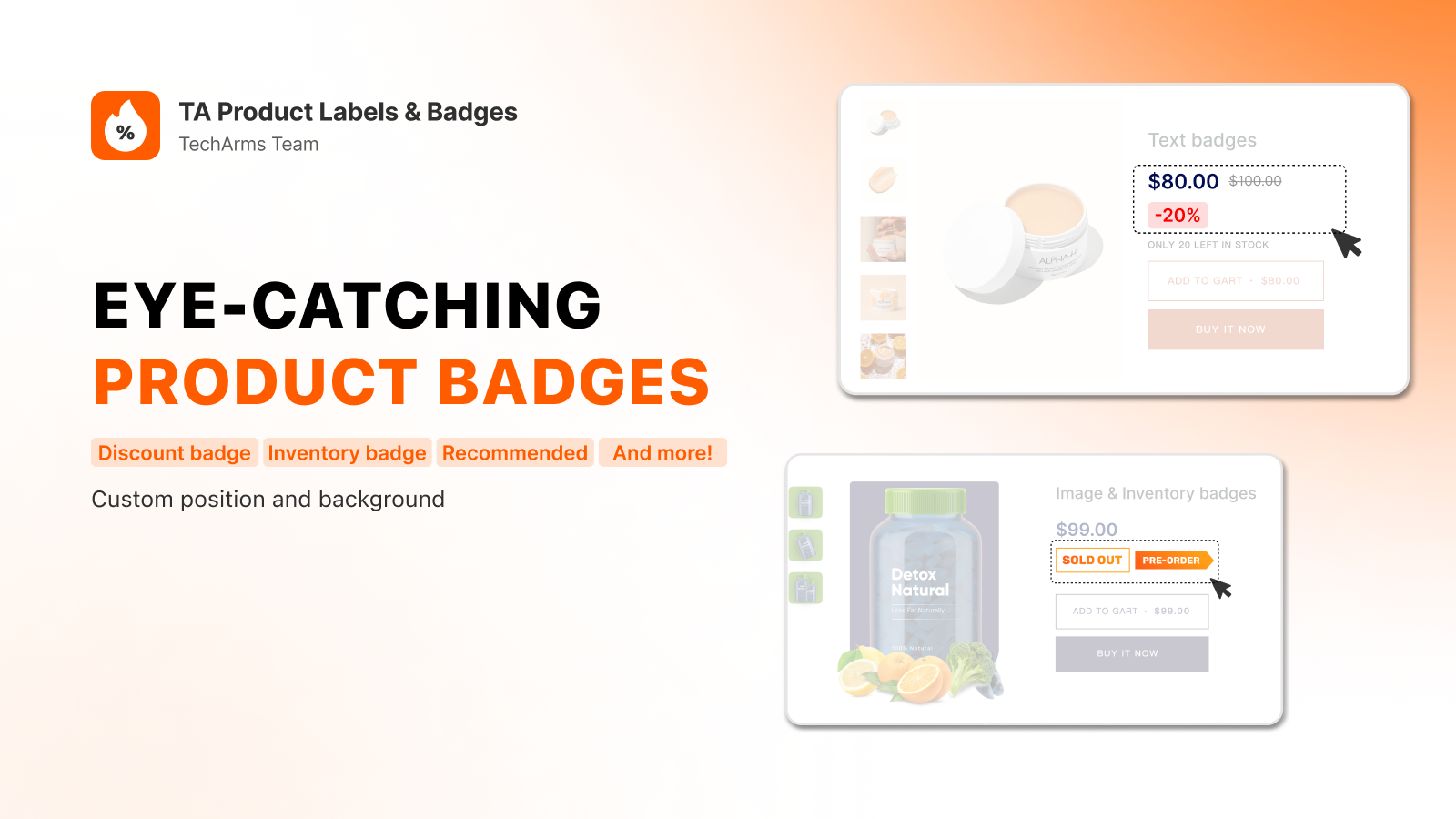
If you’re not sure where to start with product badges, TA Product Labels & Badges is the perfect place to begin. As an official Shopify Partner, we provide a wide selection of ready-to-use badge templates – from Seasonal and Holiday Badges to Free Shipping and New Arrival designs – helping you highlight what matters most about your products. With just a few clicks, you can make your store look more engaging, professional, and conversion-ready.
FAQ about product badges
The optimal position is typically at the top corners of the product image, with the top-left corner generally performing best in Western markets. This placement ensures immediate visibility while preserving important product details in the center of the image.
According to conversion research, u0022Best Seller,u0022 u0022Sale,u0022 and u0022Free Shippingu0022 badges consistently rank among the most familiar and powerful for driving conversions. However, effectiveness varies by industry, product type, and target audience, making A/B testing essential for your specific circumstances.
Excessive badge use creates visual clutter and confusion, diminishing the impact of each individual badge. Customers may experience decision paralysis when confronted with too many competing messages. Limit badges to one or two per product for optimal clarity and impact.
Regularly refresh your badge strategy based on performance data, seasonal relevance, and changing customer preferences. Rotate badge types, update styling periodically, and remove badges that no longer reflect current product status to maintain authenticity and customer trust.

Hi, I’m Vu Cam Chi – a detail-driven digital marketer focused on building practical growth solutions for ecommerce and digital products. I combine data, user behavior, and clear messaging to turn ideas into results. Strategy guides my decisions, and optimization is part of my daily work. I care deeply about creating experiences that make sense for users and actually perform.